I first heard about Global Tapestry of Alternatives (GTA) a few years ago, when we were lucky enough to host Colombian scholar-activist Arturo Escobar in San Antonio. An anthropologist and political ecologist well known for his critiques of “development” as a colonial paradigm, Escobar mentioned his work with GTA, which he described as a “network of networks”—a process for weaving together on-the-ground efforts and movements across the Global South to imagine and enact radical alternatives to a world beset by multiple crises.
According to GTA, “alternatives” are:
“existing or still-to-come activities and initiatives, concepts, worldviews, or action proposals by collectives, groups, organizations, communities, or social movements, that are attempting to break with the dominant system and take paths towards direct and radical forms of political and economic democracy, localised self-reliance, social justice and equity, cultural and knowledge diversity, and ecological resilience. Their locus is neither the State nor the capitalist economy. They are advancing in the process of dismantling most or all forms of hierarchy, assuming the principles of sufficiency, autonomy, non-violence, justice and equality, solidarity, and the caring of life and the Earth. … There is no one alternative, but rather a pluriverse of them, each unique, but all committed to the above principles.”
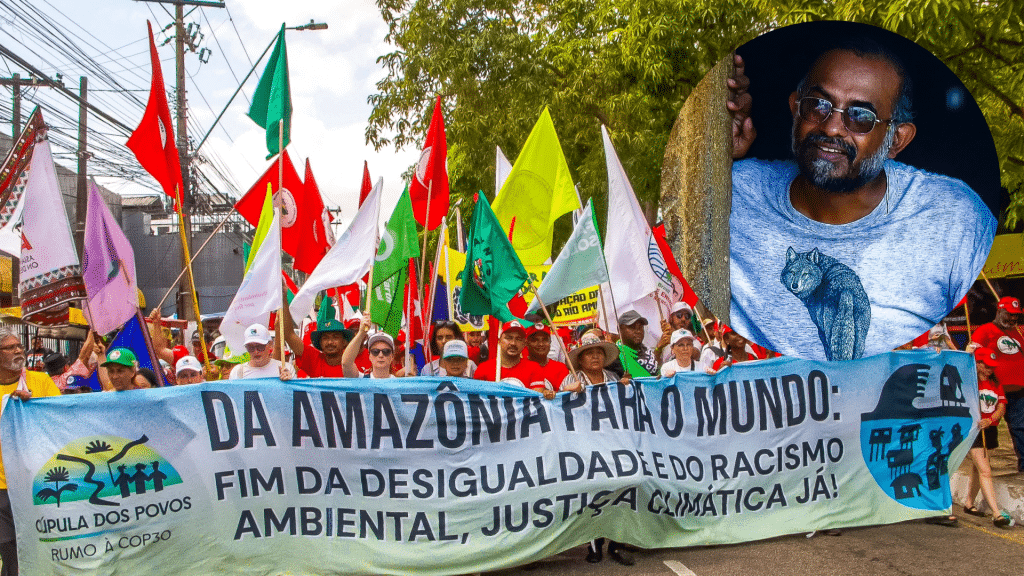
As with Deceleration, all articles shared via GTA’s website and newsletter are creative commons, and in September 2025 we republished a piece by Ashish Kothari, one of GTA’s core members, reporting back on a February confluence in South Africa that produced a statement on the centrality of autonomy and radical democracy to the creation of alternatives. In the leadup to the COP30 global climate conference last month, I saw that GTA was organizing a half-day discussion on radical democracy as the “missing debate of COP30,” a pre-event to the People’s Summit that would run parallel to the official COP process.
As GTA explains, this conversation is crucial because (as Escobar also writes in Pluriversal Politics) “the climate crisis cannot be solved by the same logics of growth, development, exploitation, and extractivism that produced it.” And given the many unsurprising disappointments of the COP process, which ultimately caved to the demand of petrostates like Saudi Arabia and Russia, that official agreements strike any mention of fossil fuels, let alone a plan to end fossil fuel use or deforestation, GTA’s aims for participating in the process are all the more powerful.
There is a need, they write, “to bring visibility and legitimacy to grassroots alternatives that are already embodying just and sustainable ways of living. … The real hope for the future lies in these radical practices, not in bureaucratic delays or superficial policy measures. … Another world is not only possible, but already being built.”
So a few weeks ago, I reached out to GTA to invite them to share with Deceleration readers and listeners some of their thoughts and observations on returning from Belém, Brazil. How were conversations about radical democracy taken up by the People’s Summit, and the COP process in turn? I was delighted to get a response from Kothari, co-editor of the wonderful Pluriverse: A Post-Development Dictionary, who in addition to his work with GTA also co-leads Vikalp Sangam (or “alternatives confluence” in Hindi). A few days later, responding to his email, I got this poetic autoresponse from Belém:
Am in the land of samba and boa constrictor
At COP30’s People’s Summit, and various goings-on
So pl excuse me if email responses I defer
While doing my tiny bit for climate and the Amazon
We’re excited to bring you this conversation with Ashish Kothari.