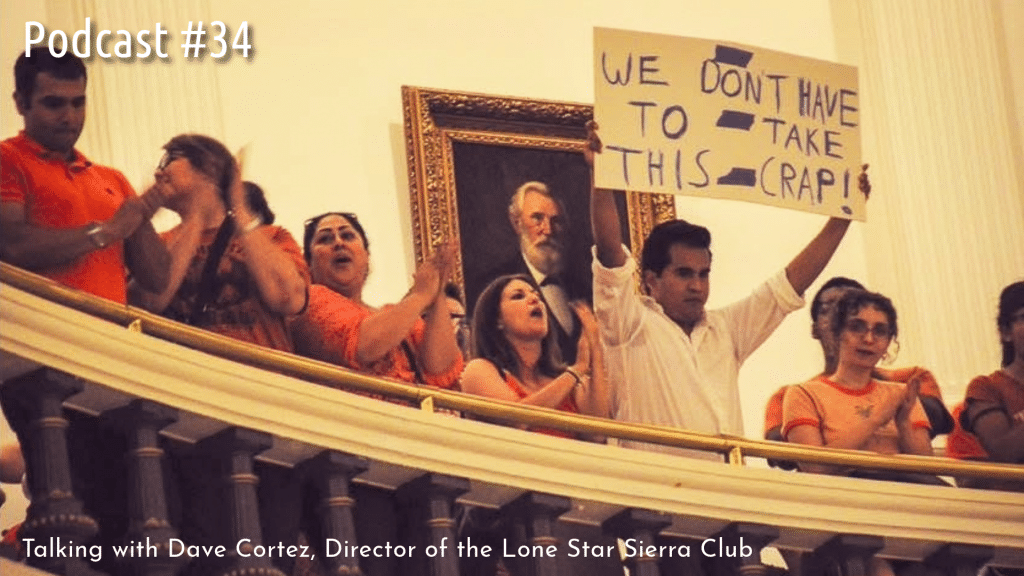
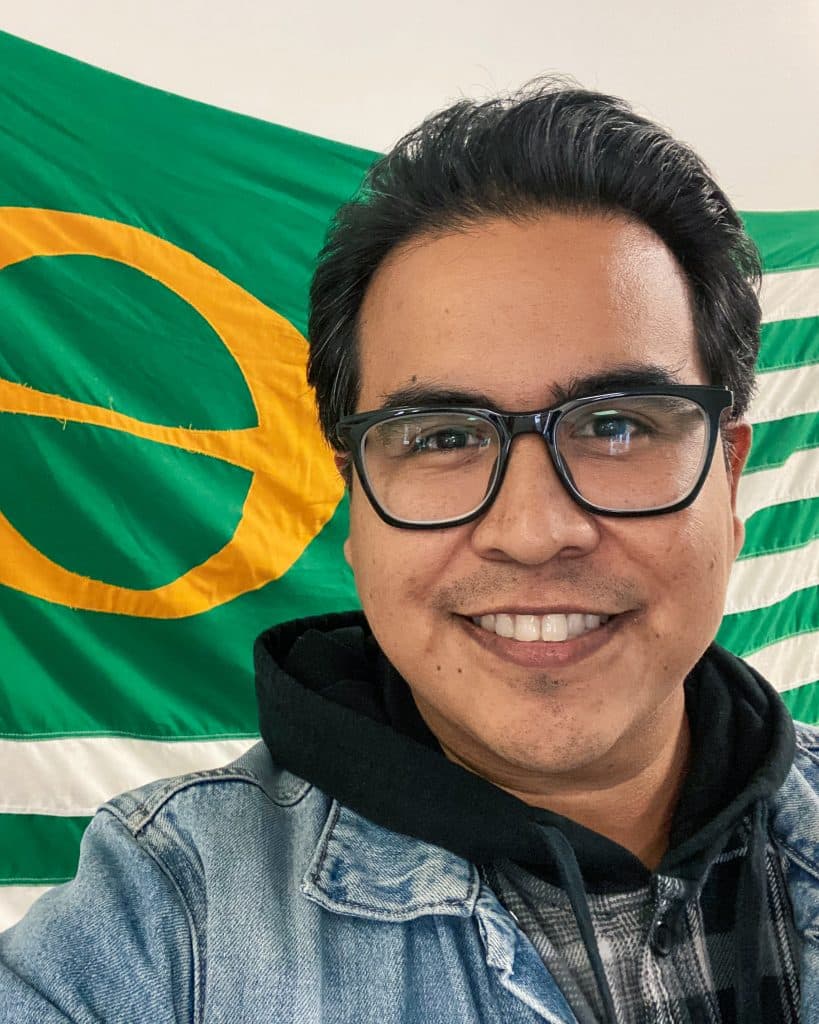
Deceleration’s Greg Harman speaks with Dave Cortez, Executive Director of the Lone Star Sierra Club, as part of Preparing to Protect, a series of interviews with those most targeted by the eliminationist engine of MAGA on how they are organizing to bash back to keep our communities safe. Topics in this podcast include right-wing organizing and rising autocracy in the United States, failures of organizing in Texas environmental movements, strategies to mobilize people around pocketbook concerns, and why we need to take the time for basic self-care in a world on fire. Dave also shares what’s percolating inside the state Sierra Club—including campaigns around energy and water justice—and how people can tap into those efforts.
Greg Harman/Deceleration: I think it’s been a couple of years since we really sat down and had a deep conversation. I’m just kind of tipping a cup to the world as we’ve known it, you know, to what’s behind us. Before we talk about fighting back and building forward: How much looking back do you think is required to understand everything that broke?
Dave Cortez/Sierra Club: Yeah, man. It’s good to see you. You know, from an organizing perspective, there was a big crescendo in 2012, in Texas specifically. 2012 was Occupy Wall Street and it was sort of bookended with women’s rights, reproductive justice mobilizations, and protests. Pretty unprecedented direct action at the Texas Capitol. And those waves pushed pretty hard for a while. At around the same time, actually a little before, around ’09 and ’10 was the rise of the Tea Party movement in communities across the country. I always point to: What did we build? Like what structure was built that still exists since then? And there’s some.
But in Texas it’s difficult. It’s very nonprofit-heavy. There’s some alternative news. There’s some community spaces. But largely it’s been couched in the political environment or the nonprofit sort of passive advocacy environment. And I look at our opposition at that same time. They’ve been consistently resourced. I mean, nonprofits, the environmental community, has been resourced too. It’s been millions of dollars put into organizers fighting LNG and Gulf Coast infrastructure. But, you know, Tea Party, the Koch brothers, Karl Rove, and all that, they were building infrastructure. They were building plans. They were building to take control, seize power. It was always about power. It wasn’t about a policy outcome.
They used policies to build power. Then if you really wanna peel it back, I think we have to look back to the Great Society and the response to it in the Sixties. And the slow and steady investments in building the Christian nationalist movement now, really consolidating that power over the past 40, 50 years. There was a clear agenda, there was a clear mission, clear values. And they leveraged their infrastructure through the churches, through all of the different networks [where] those values were cultivated, to the point where, fast forward, it’s all ascended into the Supreme Court, Judge Alito and his flags at his house, or the crusader Christian nationalist in the Department of Defense. All of that work has really brought them to this point, which is kinda scary. Because now it’s like: Well, where does it go next? And as for our movement…I don’t even know what our movement is. I don’t even know who I’m really speaking of here. I’m just saying: people that aren’t that [the far right organizing machine]. We don’t have that. It’s been the Democratic party.
You can go back to Brown v. Board, you know, in the fight against integration of the schools. Or Jim Crow, just trying to recover white supremacy. There was definitely the movement to build think tanks, legal research centers within academia, advancing certain kinds of judges [and] interpretations through the courts. I hear what you’re saying. It’s not like there’s been an absence of theory making [on our side], but an absence of power consolidation. Is that your assessment?
It’s like, build, seize, and hold power. Like where are we doing that? Build it to seize it and then constantly work to cultivate and hold it. They have done that constantly. That’s been their mission. There’s been clear buy-in from their base. And then how do they—in political opportunities, elections, and things like that—how do they leverage the masses to get them into power to support their agenda? Most people don’t support what these people are about. Christian nationalism, the stuff we’re hearing about airplanes and DEI or whatever it is. People don’t support that, but that doesn’t matter. Their MO is to win the elections. And when they’re in power change the rules to maintain power and move their agenda forward.
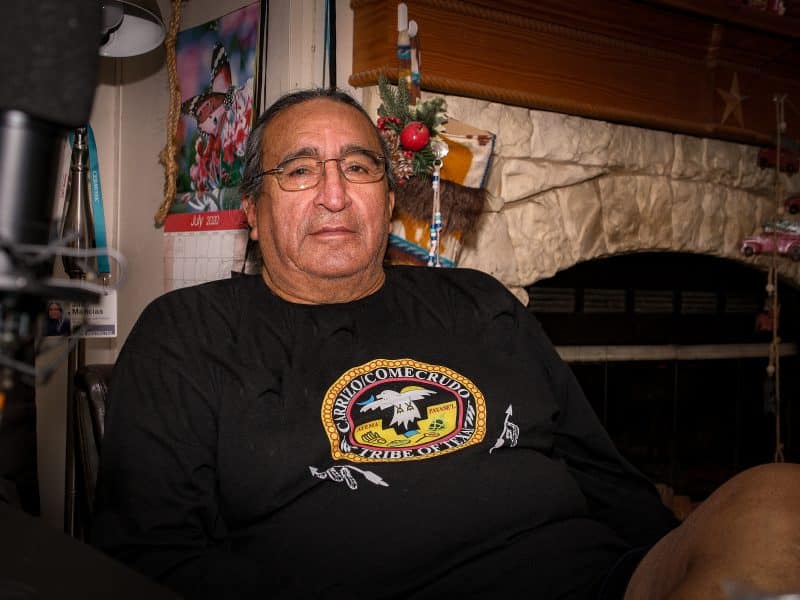
And their agenda is something that is very revolutionary. The revolution turns out, like we’ve heard the saying, it was televised. It’s been happening right before our eyes, funded by the mass media complex. And so I think for us, as as a community of advocates, of people who care about basic human rights, there’s a lot of lessons all over the world, all over the country, for cooperative organizing. For folks who are trying to build sustainable, self-sustaining communities. I was reading Juan’s interview with you, [Carrizo/Comecrudo Tribal Chair] Juan Mancias. You know, like, generational knowledge, decolonial knowledge. And we just need to find ways to to do it at scale. And that’s just so tough because we’ve been operating in these silos for so long. Different issues, different funding streams. We don’t have that banner buy in to a core set of principles and vision.
It’s interesting what you’re saying, how ultimately unpopular many of these policies that are already being rolled out are. The consequences of this election on working people who supported Trump are gonna be profound. I feel like there’s a huge opportunity to start catching folks as they just, like, fall into the abyss where there’s no social safety net. … That was always the challenge to [the right’s] work because their policies were so unpopular: get rid of social security and Medicare and roll back civil rights. It’s like they had to trick their way in with this faux populist cult of personality, which also holds a lot of the conspiracy networks and everything else. So in the absence of that…not for lack of trying though. I feel like intersectional environmentalism has been the touchstone that’s assumed for anybody who’s getting involved to fight. The war on carbon was like 1980s maybe, 1990s, and it changed quickly [to be more intersectional]. But I guess a two-part question: how class is being elevated in the environmental justice movement? In the absence of a core key identity or a charismatic super leader or whatever, how are you struggling and working through that question to bring people into a common space and common struggle?
You know, it’s been a battle. And I’ve always had that battle in the environmental community. First, it was around diversity and privilege, gender privilege, race privilege, class privilege. And it still exists. Still a lot of battles. But in labor, labor’s got its own problems, but we never had the problem around class consciousness and class solidarity. It was much easier to move in response to economic impacts on on everyday people, working people. Funders, big foundations, are real slow to be responsive.
I’ve learned, and I’m comfortable saying openly, that the professional managerial class–the managers between the very wealthy people who fund the foundations and the staff that direct the money out to the organizations–it’s almost like you have to organize them as much as you have to organize the decision-maker, the council member, whoever else it is. Because at times, it feels like they’re more interested in their photo op with an Indigenous, Black or brown frontline kind of person than they are about what the work is or, like, how are you trying to build that work in with other organizations? Like, what’s the infrastructure? What’s the process? What’s your accountability systems? There’s no questions about that. It’s just like, I need to sell this picture back to the wealthy people. Here you go. And they control so much influence over how a lot of organizing happens in the nonprofit world.
I do appreciate political spaces. Green Party spaces, DSA spaces, PSL spaces, other spaces where it’s a lot more free to just be honest about these things. But, you know, those spaces are lacking a lot of the tools to reach people en masse and offer points of entry to talk and learn about why class is a critical component of environmental work. Cost of living is the fundamental one. I mentioned earlier there’s been millions of dollars poured into fighting fossil fuel infrastructure in Texas over the last seven years. It’s hard to say what’s actually in place to support growing that when it’s not funded. It’s really hard. If it the funding goes away, it seems like the work dies.
The infrastructure you’re talking about is the human infrastructure.
People. Yeah. Our calls, our meeting spaces, our networks, our text channels, all these things. Like, you know. It’s there, but it’s small. And it’s kind of, at times, it’s cliquish. Like you gotta be plugged into that kind of thing. It’s not mass scale. It’s not big broad assembly scale. Some of that exists in some pockets, but in Texas it’s not a statewide thing. It’s little pockets here and there. There’s a ton of opportunity, in my opinion, if we connect those issues to class and economic cost of living issues that–one, we’ll reach more people. Two, it will help us broaden who we’re talking to and challenge us on our perceptual screens of the world, our theories of change that we think are going to, you know, “win.” Quote/unquote.
When you get more people who are just trying to put bread on the table, put their kids’, you know, clothes on, get their kids’ shoes, and pay the bills, it makes you simplify the work a lot. And then, you know, then it gets to be a bit of a challenge: like are we gonna lean in on, only certain people can talk? You have to talk a certain way, that kind of stuff. It’s all important. But how we cultivate consciousness. If we talk about economic justice, I think it opens the doors.
So what y’all see happening in San Antonio around rates, electricity bills, that’s awesome. I wanna see that in communities across Texas. Why is CenterPoint Energy making billions while people die? Why is Encor and other electric utilities making massive profits, when none of that comes back to us? Like every cold snap we get or heat wave, you know, we wanna remind people: ‘Hey. Your bill’s gonna be here in a month. And all your money is going straight to these people. And they give money to the governor. They give money to these other people that are real fascist and terrible. They’re closing our schools.’ All that kind of stuff. And give just little simple points of entry into the work. Like, let’s leverage your anger and challenge that utility. Let’s make sure that your local resources and government agencies are at least pressured to redirect funding to support your community for weatherization, for bill payment assistance.
These are base small baseline things. It’s not transformative work. But that’s not happening at scale in Texas cities all across the state. It’s happening in tiny pockets.
I think it remains to be seen, how all the different organizations and communities are mobilizing. There’s a sense, I think, from the national level media, the Washington Post writers and such, that they’re kinda like looking at the absence of overwhelming mass street performance slash protest. And thinking that that means that there’s not going to be–or that people, you know, are so overwhelmed that they’re not able to respond effectively to this administration and all that it represents. I think that there’s an underappreciation of the sophistication of the analysis within what we call—not just resistant spaces, but communities of people who are organized to create something better. This this could almost be an opportunity when this thing crumbles. When this, you know, this kakistocracy or however you say that word. This confederacy of idiots that are out there poised to do incredible harm. When that just collapses, there’s an opportunity to build something, you know, beautiful. Right? But there’s also kind of a terror, though. Leading up to the election, we were trying to make the case: look, we’ve gotta be in solidarity just to hold MAGA out of power, because clearly, as you said, and I agree with you, they’re doing everything and have been doing everything to set the scene, so that they never leave power.
That’s where we are now with legislation being introduced so Trump could have a third term. You know? Oh, he should have a fourth term. Who can vote? Who’s a citizen? All that stuff. We’re rolling back those questions to Jim Crow, essentially, I think is the plan. But just emotionally, for those who have been aware and tracking climate science and, more broadly, the breakdown and collapse of ecological systems worldwide, of the the Amazon teetering between being a carbon sink, a healthy tropical forest, and something that could ignite on fire. There’s so much going on, and we’ve been told we’ve gotta reduce, you know, half [of our carbon emissions] by 2030 or more. Saying goodbye to those dreams, particularly as parents. How are you navigating those thoughts with framing up what’s possible?
So that was for me–like, my bias is, I never really understood that stuff. Scientifically, but also like: I had no epistemic connection to it. What does that even mean? 1.5 [degrees]? Oh, we gotta shift to now just pulling carbon out of the air. My organizing experience has always been about power, you know, being from El Paso and just watching the state repress people.
Describe that a little bit.
You know, growing up in the 80s, middle class, in a good house, stable—where we grew up in El Paso, you could still see the big smokestack, the Asarco smokestack. It’s 828 feet tall, and everybody knew it. It was just, like, part of the town. We kinda loved it because it looked like a candy cane. But I didn’t know that none of us really understood what was going on with the air pollution, what was coming down. It was a copper smelter, and it rained down lead, carbon, arsenic, and cadmium. Among other things. Right?
As time went on and I got older and other people became more involved in the work, you know, in school and stuff, we learned—oh, the stuff that we were playing with, it gets under your nails, and you put your fingers in your mouth. Well, you’re putting stuff in your body. Like not just dirt. It’s heavy metal contamination. We learned how the corporation was running the stacks harder at night when there was wind into the colonias and into Juarez. We learned, you know, workers were exposed to stuff and very sick. When we challenged that—like what’s right and what’s wrong—that’s how I got plugged into organizing.
You know, the city council and Beto O’Rourke and other people were on our side and very vocal. But then it was the state government, governor Perry, Bush’s appointees, and the corporation’s CEO Carlos Slim, who was the wealthiest man in the world at the time. The amount of influence they could leverage onto the state of Texas to just give the the company whatever they wanted. That was a rude awakening for me, because I hadn’t been exposed to that. Like, oh, it’s not about numbers. It’s not about emotional appeal. It’s just about power.
All this other stuff around climate goals in Paris. … I respect folks. I’m not trying to [disrespect] work. But I never really understood, like, these [Conference of the Parties] conventions and things like that, where we spend Lord knows how much money, burn Lord knows how much carbon or fossil fuels. … Like, it’s always been about power and organizing it. We gotta be pouring resources into building people infrastructure. And it’s just been such a battle to get people to support that in Texas. It’s just really hard.
So I don’t think it really ever resonated with a lot of the broad electorate either because it was kind of complex. But … the horror of the 2021 [winter] storm is something people will remember the rest of their lives. Anytime it gets cold, it triggers the trauma. Now in the summers, I mean, it’s like just insanely hot. You know what it’s like in San Anto with the heat island effect and the folks that are left behind. There’s more opportunity to sort of remind folks and articulate and educate about power dynamics in play. This is happening. We’re struggling—and they’re making even more money. Every time it happens, they make more money. Right? It’s good business for them. And that’s inherently bad.
So we need to do everything we can to support the people around us. First your family, your neighbors, and your neighborhood. But then your networks, right? And that’s something I feel really good about just screaming from the hilltops this year. … We’re gonna respond much faster than the state will, than the government will. And the people of Houston know that. The first few days that are critical: It’s us. It’s just us.
It’s interesting hearing you talk about ASARCO and El Paso. I feel like I had a very similar kind of [experience]. … I was in Odessa. It was my second journalism job, and it was the mid to late 90s. And there was a Huntsman Polymers plant out there at the industrial complex. They were doing this big expansion and something tripped. And instead of shutting down the product, they just flared it. It was in the late fall, I think. And I remember there was a cold air inversion. So everything they were burning was going up about 100, 150 feet in the air, and then just sitting there over the south side of Odessa. And those first couple of weeks were pretty instructive. I wasn’t there as an organizer. I was there just to document, to record and put good information out in the world. And what I saw from the public relations response, they were having these fairs and everybody’s getting free hot dogs and Cokes. And I realized, whoever doesn’t have the power or the resources to hire a public relations company out of Austin, Texas and bring them out to cover their asses…like, I was gonna privilege those people. Right? The ones that didn’t have that kind of access. Very simple. I think I did get caught up kind of in some of those carbon numbers and things. And I know they’re not fully accessible. But I think it work did kind of psychologically, like, ‘Oh, shit. We’ve got these all these spinning plates. And when one of them tumbles it has this potential to cascade.’ And that comes into our communities at home.
Totally.
So the need to exercise this movement for power building is critical. So I guess it’s a question of how we organize. What are your priorities for this year coming up? I hear you talking about power, grid reliability, power sources, energy sources. What how would you frame that for folks?
It’s consistent with what I’ve been saying today. It’s all about networks, training, building, communicating channels and infrastructure for people to do all those things. We were told after the election: find community, join community. That’s what we gotta do right now. It’s really scary. You know, Trump. Well, how the fuck are you supposed to do that? Like, OK. Do I buy that? Do I go online and buy that? I can find it. I know how. I’ve been through that. But that’s not an easily accessible thing for people.
You’re talking about the messaging that was put out there, go find your community?
Yeah. Go find your community. If you wanna be part of community, look at what’s out there. Map it. We see there’s Democratic groups. There’s other political organizations. There’s neighborhood groups and whatnot. But people are just gonna go where they feel comfortable.
And welcome.
And welcome. And a lot of spaces are really challenging. They’re either homogenous in their groupthink, like, siloed on their issue, or on their way of advocating. They’re not coming from a place of building power. Like: ‘Hey. You know what? I might not agree with you on everything.’ Take Gaza for example. It was, ‘fall in line.’ It wasn’t like, okay, we’re gonna find a way to build the base and the mass as much as possible. It’s horrific what was happening. Is happening. … We need to strategize to make sure that we’re getting more people and not just having battles with the fringe of vocal pro-Israel folks. There’s a lot of people who wanted that genocide and war to end a long time ago. How are we calling them in? How do we make the space safe? And you could apply that to a range of issues. Are you welcome here or not? Is this place for you or not? Are we having fun at all? Does that matter or are we very serious here?
I think it’s the podcast, It Could Happen Here. I don’t know if you’ve tapped into that. It’s anarchist, I think trans-hosted. Pretty powerful. Marisol will correct me later if I’m wrong. But I think one of the one of the phrases that I’ve used, that I picked up there, was that we need more ushers and fewer gatekeepers. There’s this reality of people [within movement spaces] who continue to bash and fight potential allies over who’s got the best analysis. Analysis is important. We need to understand, like, what the systems of oppression are. And yet at the same time, under autocracies, which we’re slipping into fast, everything I’m reading is you’ve gotta have a big tent. You’ve gotta have nontraditional relationships. You’ve gotta be working your trust networks. We need each other. And I don’t mean just the people that you have fun with. We need each other.
Absolutely. And let’s do it in a way that is nourishing for our hearts, our spirits, and our souls. I mean it. Like have fun when you’re talking to people. Don’t be the dude with your fucking clipboard. ‘Hey, you gotta get in on this thing. It’s so important.’ You know? Like, smile, laugh, look people in the eye, you know, shake hands. If you got a code switch, learn how to code switch. You know? And, like, for me, I’m just trying to live that personally because, you know, Trump 1 and then the pandemic—I mean, it’s exhausting. Parenthood in the middle of all that. Exhausting.
And now it’s like, here we are. I can’t just flip a switch and go back to pre-parenthood activism and organizing. Like, I gotta figure something else out. First and foremost: go get those appointments scheduled. Go get your teeth cleaned, if you got insurance. Let’s be mindful about what we’re consuming and how much is through our news and how much from social media. Try to set limits. And really, for everything you read, try to share a funny dog meme or something like that. Or just put that shit away. Similarly, nourish your body and your mind as much as you can. If you gotta meditate, if you can take the time for that, if you have the capacity to do that. You know, the world’s on fire. There’s a lot going on. But also, like, just give yourself a little bit of a challenge to eat something fresh, if you can find it. …
I know that’s shown a lot of class privilege. But for me, these past eight years—the pushing, the lack of sleep, the alcohol, the smoking—was literally killing my body. I got the wake up call. If I’m gonna be a good partner and a good dad, I needed to make adjustments right away. If I’m gonna be a good organizer for my team, those things matter too, but also I need to make sure that they’re doing the same. And so as we do that, let’s apply that same thinking to our organizing. If you’re going to a meeting, who’s coming with you that is not, like, a paid NGO staffer, right? How many unpaid folks are you talking to every week? Doesn’t matter if you’re an organizer or what your job is. Who are you talking to? The ushers that you mentioned. Right? Let’s preach about networks. Let’s find that common ground.
So I have my team doing two things. We talk about electricity and cost of living, which we will have opportunities to do for years to come as Texas subsidizes more fossil fuel and nuclear power plants on our backs. We wanna say, ‘What about us? Why don’t you invest in helping us be safe as the weather gets hotter and colder and our bills go way up?’ And then the other side is is water. Kind of need it. It’s drying up. Jacob’s Well right now is dry as it is in midsummer. Elon Musk and other industries are taking it, literally taking the commons. We’re also paying a lot for it, but, also, they’re talking about things like, ‘Hey, you know what? That water that we pull out of the fracking well and the oil and gas well, maybe maybe one day we could drink that. Maybe one day we could feed that to livestock and whatnot.’ Water is life. We know that.
And we apply all this last point through a network lens. Like, I need people in Corpus Christi who are fighting the erasure of a historically Black community for a desalination plant. I need them to have their story heard in Amarillo and in Fort Worth. Right? And then I need the folks in Arlington who hear that story to be able to share, inversely: ‘Hey, they’re trying to drill next to my kid’s daycare for fracking.’ Like, if we don’t do that more, we are just gonna be fighting one little fire at a time while the big wildfire burns—and we don’t do anything to stop it. So networks around water and cost of living in electricity. That’s that’s our main main focus this year.
Marisol and myself, both kind of in our histories—your encouragements to self and collective care are well met, because I know we both reached different points in our lives where either through our organizing work or our professional lives, you know, our work-work, just reached those points of collapse. And we’ve learned a lot building back. And it also means we’re not at every meeting. We’re not showing up at at every protest. We’re going where we can, when we can, taking care of the family, and trying to do the things so that we’ll be doing this, you know, 30, 40 years from now, if we’re blessed to have that much life on Earth. So I appreciate that. I’m glad that’s part of this conversation that folks can find. I’m wondering, where do you go? Are there folks right now that that are personally inspiring for you? It doesn’t have to be in a kind of movement building way, or other organizers, but what’s inspiring you these days?
Not to be some shit romantic about it, but I actually do love talking to people. I struggle with forced conversations. It’s parents, school, pickup, drop off, things like that. So I’m trying harder there to smile and just be myself. Like walk around the neighborhood, talk to somebody. Just to tell a little story from around Christmas day. I was walking with my family around my mom’s neighborhood, and there’s been this house with this Trump flag that we’d seen for months. Like, motherfucker. You know? Oh, God. Anyways, we’re walking by, and there’s the guy. He’s out there. And dude lets out a big smile, and he’s just a working-class dude. And he says, ‘Merry Christmas. It’s nice to see you all walking.’ I was like, ‘Hey, man. Merry Christmas to you too.’ And he’s got this old truck. Like, ‘I like your ride here, man.’ ‘Oh, yeah. I’m just trying to keep it going.’
Anyways, we have a lot of problems in our politics, but I really appreciated that brief moment there to connect and cut through all the false shit that keeps us apart. I got more in common with that guy than he does with Trump or corporations or anything else. And I need to find ways to connect. And so I’ve taken that spirit. I’m trying this new thing out because, you know, part of being a parent of a young child, your social circles are closed. COVID? Social circles closed. I’ve got two coffee shops in my neighborhood like a mile, two miles away. I’m like, a couple nights a month I’m gonna go there. On a night where I know there’s not a lot of people, because I don’t like to be around a lot of people. … Doing that and going on more walks with people, just like 30 minute walks. Folks are struggling, and just holding space for each other…man, it’s it’s uplifting. I see that right now in us hanging out and rapping. It’s given me lots of inspiration. Through that I’ll find out about a podcast, like you just gave me. Other friends who are doing other stuff in other parts of the country. Like, ‘Oh, cool. I’m gonna go read that.’ It’s restoring the function to a muscle that’s been lost over the last eight years, that was burnt on rapid-response mobilization. Burnt by shutting down the world shutting down.
There’s an article on In These Times. I think it’s titled ‘We Knocked Too Many Doors,’ something like that. My homie who used to live in Austin, Andrew Willis Garcés, wrote it, and it’s about him and his partner Nikki, and their work in North Carolina over the last eight years, parenting too, building infrastructure in response to the deportation machine. And the pressures they’ve endured from the Democratic Party apparatus and other states too, to mobilize, mobilize, get out the vote, voter contact, call, light touches. And flipping that—instead being like, you know, we’ve seen better success when we have year-round issue-based organizing, particularly around cost of living. So rates, you know, tenant rights, you know, things that are gonna protect people in their own homes, working-class people predominantly. When you do that and you have that available, it helps you build that infrastructure, helps you build that community that we’re talking about. And people are gonna be much more likely to participate in a range of political mobilization, voting times, whatever, elections when those come around.
I’m trying to get more people to think that way, read about that stuff—read about, you know, operations like Cooperation Jackson in Jackson, Mississippi. Or other collectives, even in El Paso, you know, Project Amanecer. Work that is gonna be around. It’s gonna sustain itself regardless if the funding’s there. No matter the fascism. It’s community centered. That kind of stuff. You know? And then I’ll just be cheesy and say my my kid, man. It’s a lot, but also just radically hope filling. You know? Try not to get mired down on what the world could be like. Just seeing seeing a little human grow, learn, struggle. That’s special.
I appreciate that, Dave. And just getting caught up in just the wonder of life. We can’t surrender that. I think there’s something about digital spaces and social media platforms that are engineered to create that kind of hyper polarization, hyper conflict, demonization of others. And certainly, like, political movements like MAGA embed that within who they are: ‘They’re cockroaches’ or whatever it’s gonna be. It’s hard. You know, speaking as a white man, it’s easier for me maybe to say this sometimes. But we have to hold open the opportunity for people to evolve and to change the conversation you have with your neighbor. Like, come and talk about this guy’s truck or whatever. Right? And that may lead to other conversations. And who knows?
Might not. But yeah. Who knows?
And it might not. But there’s this tension between having zero tolerance for shit politics that kill people and holding out the possibility for transformation within people. There’s this one person online, I watch them. They’re like, ‘Oh, we gotta be harder. We gotta be stronger.’ Like more muscle. It’s always the answer. And yes. But if the end point of all of this is just going to be a fucking WWF…a friend taught me at summer camp when I was like eight years old: No one wins a fight with nunchucks, right? So that was my big lesson that summer.
I love it. Especially when our opposition has seized the the state power repressive apparatus, you know, the Department of Defense, CIA, the FBI. They’ve done everything they said they’re gonna do, so far. Or they’ve tried. And they said they want to turn the military on the Black Lives Matter protests and things like that. We gotta believe them. So back to your point about no mass protest. Like I’m glad people are at least thinking it through. But there’s a lot of people that are frustrated: ‘We should be out there wearing our numbers bigger.’ But, again, where are we pointing them to? How are we ushering, as you said? We need a lot more of that. We’ve been saying that for a long time, but we don’t have a culture, an organizing culture, at scale. I’m only speaking about Texas. I don’t see that.
So I wanna make sure that I’m constantly working to put systems and infrastructure in place, people, you know, organizing infrastructure in place. So I can step out if I need to step out. Or if I go down, you know, there’s something there that someone can pick up. And it gets hard in the environmental work because of the longevity of so many diehard advocates that have been doing it for decades. They might look at me as someone who’s young. I’m 41 years old. Like I’m past middle age in some cases. And I gotta wrestle those folks for agency. We gotta do a wicked better job of passing the torch and baton, but also honoring experience, sharing knowledge, passing knowledge down. And it gets back to the the decolonial mindset and practices.
It’s not about hoarding. It’s not about ego and individualism. It’s about building something that transcends us and supports the greater good. Like, I’m not saying I’m gonna go out and find a bunch of Trump people or recondition a bunch of legacy environmental white males. But everybody needs a chance. And I really just love leaning into folks, like actual youth. You know? People who are not college age but younger, in high school. Or kids, children. And just talking, reading books to them about organizing, talking about change and structure, like social structure and systems. They’re very smart, man. We just don’t give them an opportunity to step into this stuff. And that gives me a lot of a lot of energy.
I’ll drop into the show notes three things people can do, today. But are we speaking against kinda even that kind of organizing? I had a friend who was legit scared. And she’s not a person of color, not trans, not all these people who are first in line to get the boot right now. But she was scared. She knew things were wrong because she didn’t have any organizing network. She didn’t have a robust political team to lean on for analysis or to feel like things could be different. And so I just had to coach her a little bit. Do you have a group like that in your town? Can you make time for an hour or two a week to make those new connections? And I think she’s doing better, but people who don’t have a particular background in this world are a little bit off balance.
You know, one of the principles you and I used to talk about, like from the People’s Institute in New Orleans: there’s no quick fix. There’s no quick fix to 40 to 60 years of ascension of right wing power. Christian nationalist power. These things take time. I’m not perfect. The work that we’re doing isn’t perfect. So I always ask for people to operate from a place of grace and humility as much as possible in this work, because it’ll eat us alive. So I think the advice you gave is is awesome. We try to make some space available for people to just come listen. And if they wanna participate, they can. It’s Sierra Club but we’re trying to make it less Sierra Club siloed and make it more open to a lot of organizations.
So the water thing I spoke about earlier: We’ve been doing some talks, you know, 30 minutes a month. So we had something about nurdle pollution on the coast, talked about Diane Wilson’s work, what’s a nurdle. And then we have people from different parts of the state give updates about what they’re doing on water. It’s called The Water for People and the Environment Committee. We have it on our Sierra Club Texas website.
We also have what’s called Keep The Power On. It’s another committee focused on the electricity issues I talked about. And that’s something that’s a little younger in terms of its structure, infrastructure, but we’re building it. We’re really kinda zeroing in on the Legislature right now because, again, they’re trying to give another $5B of taxpayer money to private corporations to build polluting power plants—instead of helping us be safe in our own homes. … We have a monthly space where people can join, learn about crypto mining, or what the heck is ERCOT anyways? Like, how are they all appointed now by Dan Patrick and Governor Abbott? Those are two good spaces for folks who don’t have a place.
But for the activist community, the organizing community, a lot of those who read Deceleration, or hopefully support it, also reach out. Like hit me up and let’s talk about this. How do we transcend the nonprofit industrial complex in a way to serve the movement that we’re trying to build? Where we still feed them what they need to eat, but we use the resources for maximum potential in making our communities thrive and more sustainable. Let’s talk about that. Let’s let’s not be reactive to what the funders want. And when they are giving us a lot of resources, maybe we can hold each other accountable. I really get so tired of how many NGOs operate on the same issues, but don’t actually share their plans or their resources together. I’m like, ‘Aren’t we here together?’ I don’t get it.
I’m also, you know, on the Meta platforms: Austin by Chuco. El Chuco is my handle.