

Welcome to Water and Power, a monthly newsletter about the elements of our survival—and those who seek to profit from them. Water & Power highlights reporting found at Deceleration, but also offers links to critical stories from other publications, prepares you to engage on these issues with notices of events around the bend, and always offers unique content exclusively for newsletter subscribers.
If you know someone who would appreciate this research and analysis, pass it along. Subscribe to this and our growing roster of Deceleration newsletters.
No One, No One?
"No one here is really against AI," the local attendee of the Texas Data Center Rebellion told me, matter-of-factly. "Think about it: Your cup was made with AI. Your shirt was made with AI." It was a frank assessment, and, as the day wore on, proved to be a tad fringe. There was a definite "burn it down" sentiment among many of these who are losing the fields they played on as children, choking on air pollution from new power plants feeding the facilities, or watching a retreating aquifer in the Panhandle get tapped for demands expected to literally suck away their future. Yes, we're embedded in AI. But that's a new condition. For those holding out for the next cool gadget, maybe that mindset will shift after hearing Sanjay Ravigopal—who, yeah, is building a career inside artificial intelligence, albeit as a rising skeptic—take the floor.
"One reason they are building data centers is for artificial general intelligence, AGI. And that's supposed to replace the human brain. ... They want to create AGI to replace us. ... And they're destroying our environments just for their experimental sake. AI already works, but they're trying to get to the next level."
"Next level" seems to be the one most of us want to avoid. If we could dial back to War Games- or Tron-era technology, I think most of us would adjust just fine. Especially if it meant we could also somehow manage to keep our coral reefs and Amazon Rainforest. Of course, this was also a 'No Kings' weekend, too, and the closing of Todos Agua III in San Antonio. So I had to beg off for most of Day Two of the Rebellion. Yet I still couldn't escape AI concerns. There deep in the marching throngs I encountered a software engineer in an eye-catching pink outfit and giant red line striking out "AI" on a poster:
"AI is really doing a lot of bad stuff," they told me. "I'm a software developer right now and what it's doing to the industry: It's taking away jobs, it's lowering the quality of the kind software we're putting out. It's gonna be a nightmare. We can't control it."
I was reminded of the popular critique that gets leveled by at least one fossil fuel booster at least once at most climate-related public meetings: "Who drove to this meeting? What powered your car? Gas?" Yes. We live in a world wrapped in pipelines too. That fact does not mean we shouldn't draw upon all the tools available to us to shut down the industries smothering the Earth and threatening the present and future of so many of our relatives. We drive to meetings building a better world. Some also bus. Or bike. The work of regeneration is about our climate shadow, not footprints.
Then just a few days after No Kings I drove to Dilley to visit CoreCivic's gulag for kiddies. The connection between big tech, state surveillance, and the industrial-deportation complex is real—and growing. As ICE Watch wrote last newsletter (See "How Women are Leading the Way to a World Beyond Detention"): These mounting injustices are literally built on the back of Amazon and Palantir and AT&T. Cut the cord already. For an update on that trip to Dilley, where I met Stacey Abrams and the new face of the Reading Rainbow, watch for ICE Watch's new issue, coming out next week. (Though you can catch a few pics as preview on my personal Facebook.)
Welcome back to Water & Power. We'll do our best to take care of you.
— Greg Harman
From South Texas Environmental Justice Network: "Urgent: the LNG project, Rio Grande LNG, which is already under construction on Highway 48, is seeking a permit to expand the facility to export more methane. The community should submit a public comment to the Federal Energy Regulatory Commission (FERC) urging it to deny this permit for Rio Grande LNG’s expansion, as it would release even more toxic pollution into the Rio Grande Valley’s water, air, and land and worsen climate change." More.

Texas Data Center Rebellion Attendees Seek to Regulate what the State and Feds Won't
Data center development nationwide has gone into warp speed. The drive for generative artificial intelligence (AI) and surging crypto interests, both strongly backed by Trump and his MAGA base, are poised to triple the number of data centers in just a few years, gobbling up massive amounts of land and water, and pushing a buildout of new fossil fuel power plants that together are forcing the planet beyond the red lines of climate catastrophe.
Last December, a long roster of environmental groups called for a national moratorium on new data center construction and permitting. Texas signatories included: Climate Conversation Brazoria County, Frontera Water Protectors, Hold the Line Campaign, Texas Physicians for Social Responsibility, and Turtle Island Restoration Network. The letter summarized that:
“The rapid, largely unregulated rise of data centers to fuel the AI and crypto frenzy is disrupting communities across the country and threatening Americans’ economic, environmental, climate and water security.”
That campaign reached the progressive caucus of congressional Democrats, who recently advanced their own moratorium proposal.
Meanwhile, President Trump, though possibly starting to second-guess his initial AI bullishness after rising and widely bi-partisan backlash against the facilities has worked to block states from regulating data center development.
The center of the data center universe is fast shifting from Virginia to Texas, where some of the largest projects dedicated to realizing the full manifestation of artificial intelligence are either planned or already grinding earth. Projections from global real estate firm Jones Lang LaSalle Incorporated (JLL) hold that the Lone Star State may be the world’s leading data center hub by 2030.
“Abundant energy resources, ample land availability and a business-friendly operating environment support this trajectory,” JLL analysts write.




Texas Residents Organizing Against Data Centers
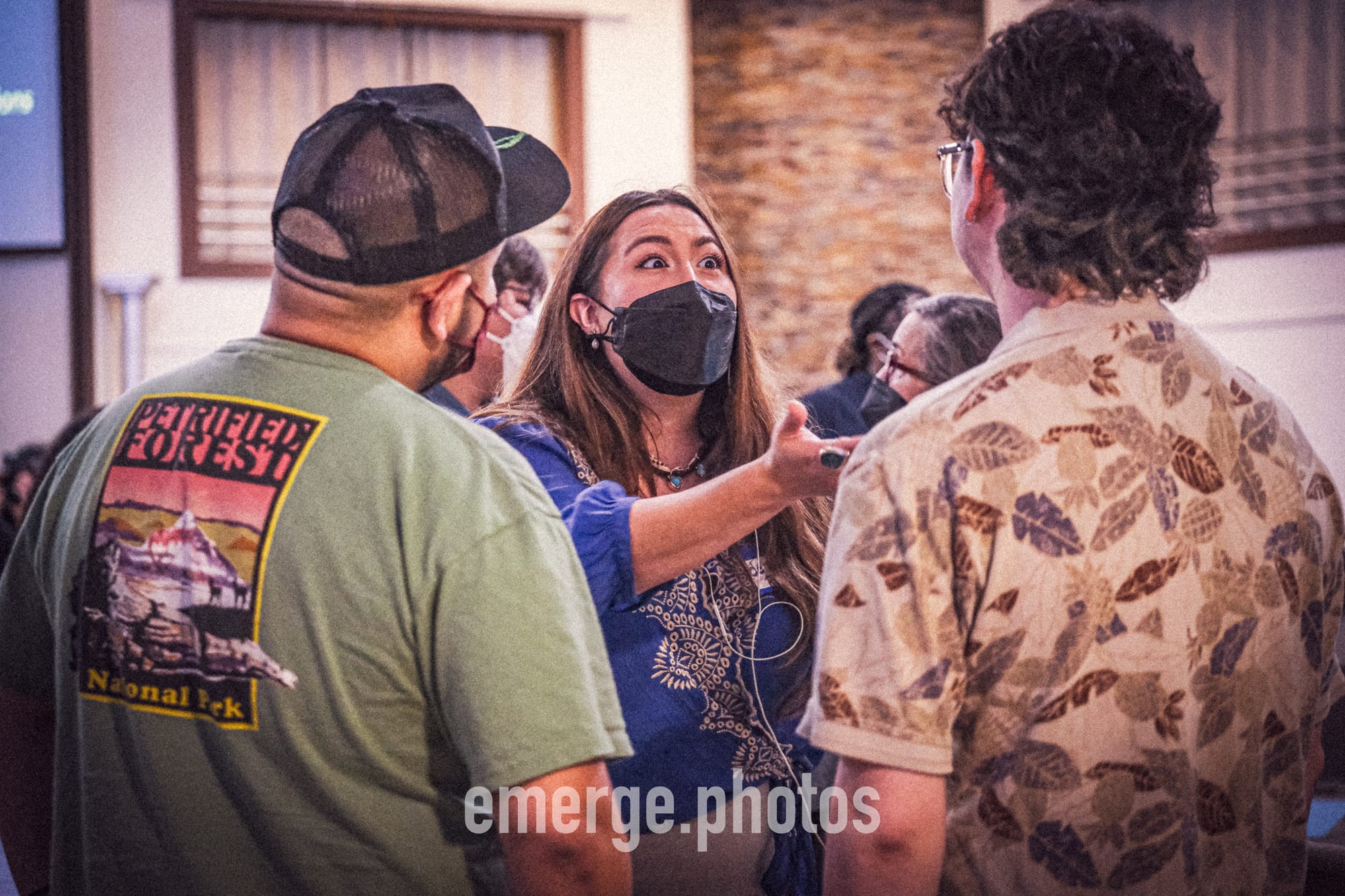
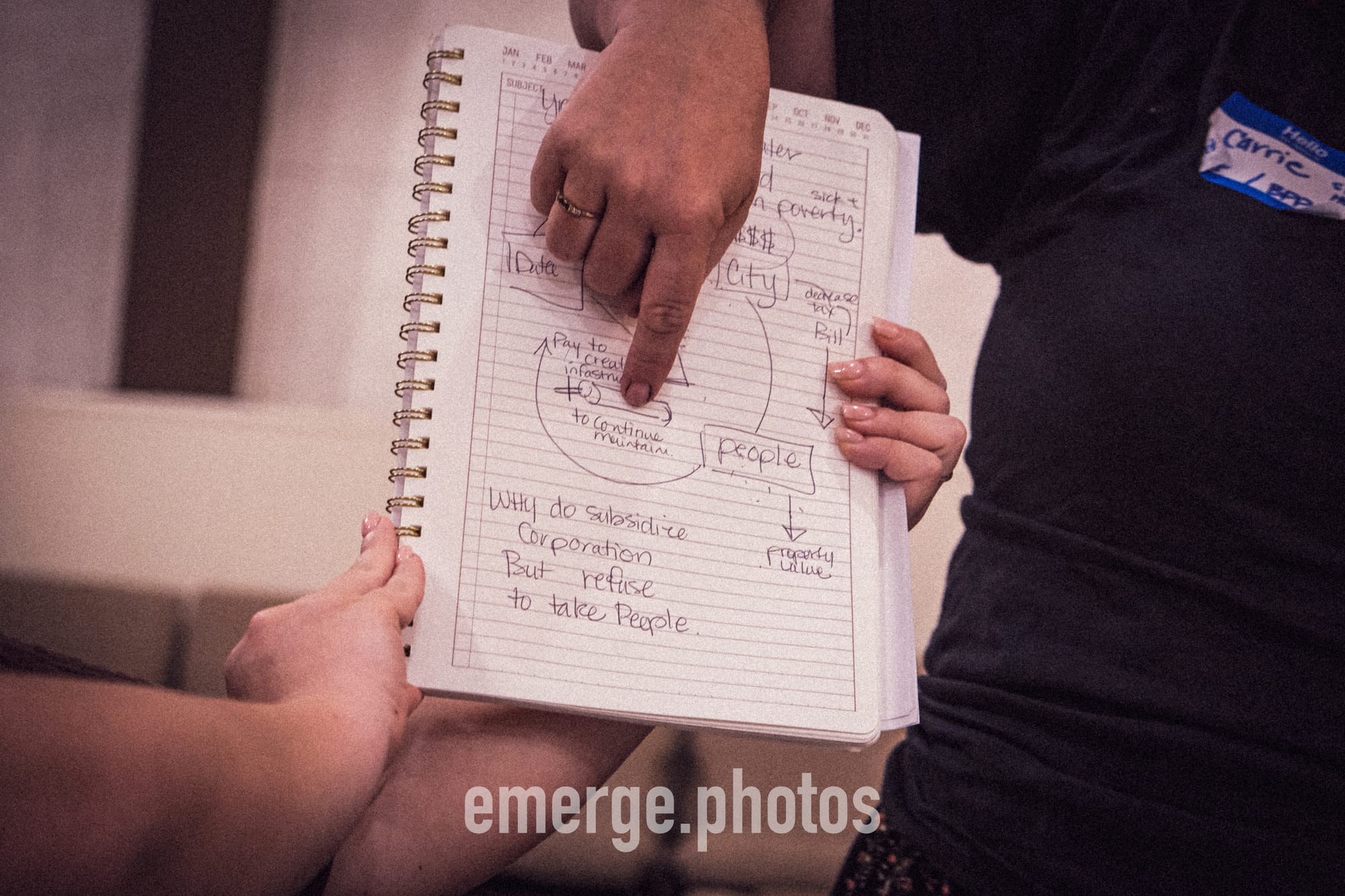
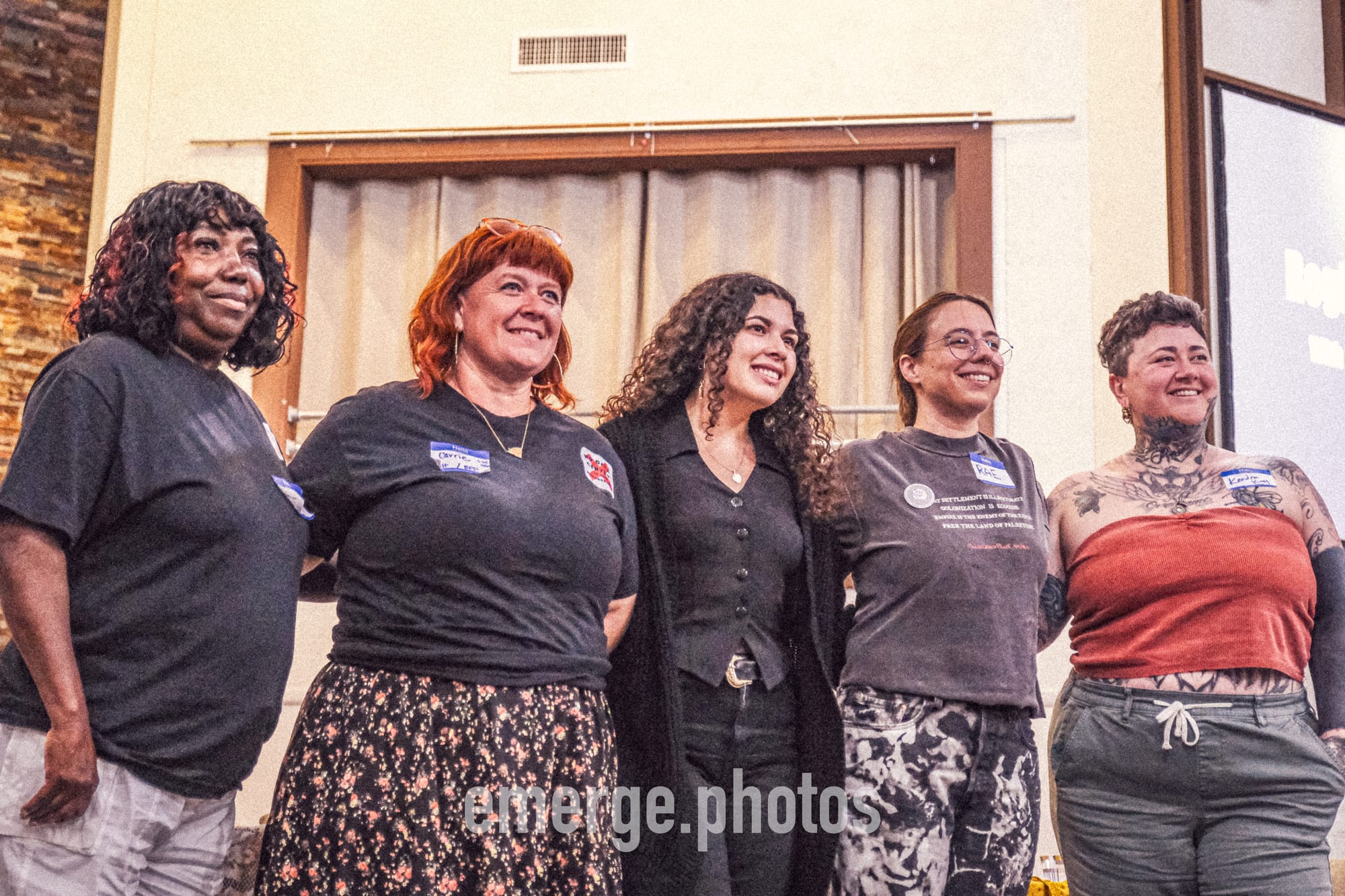
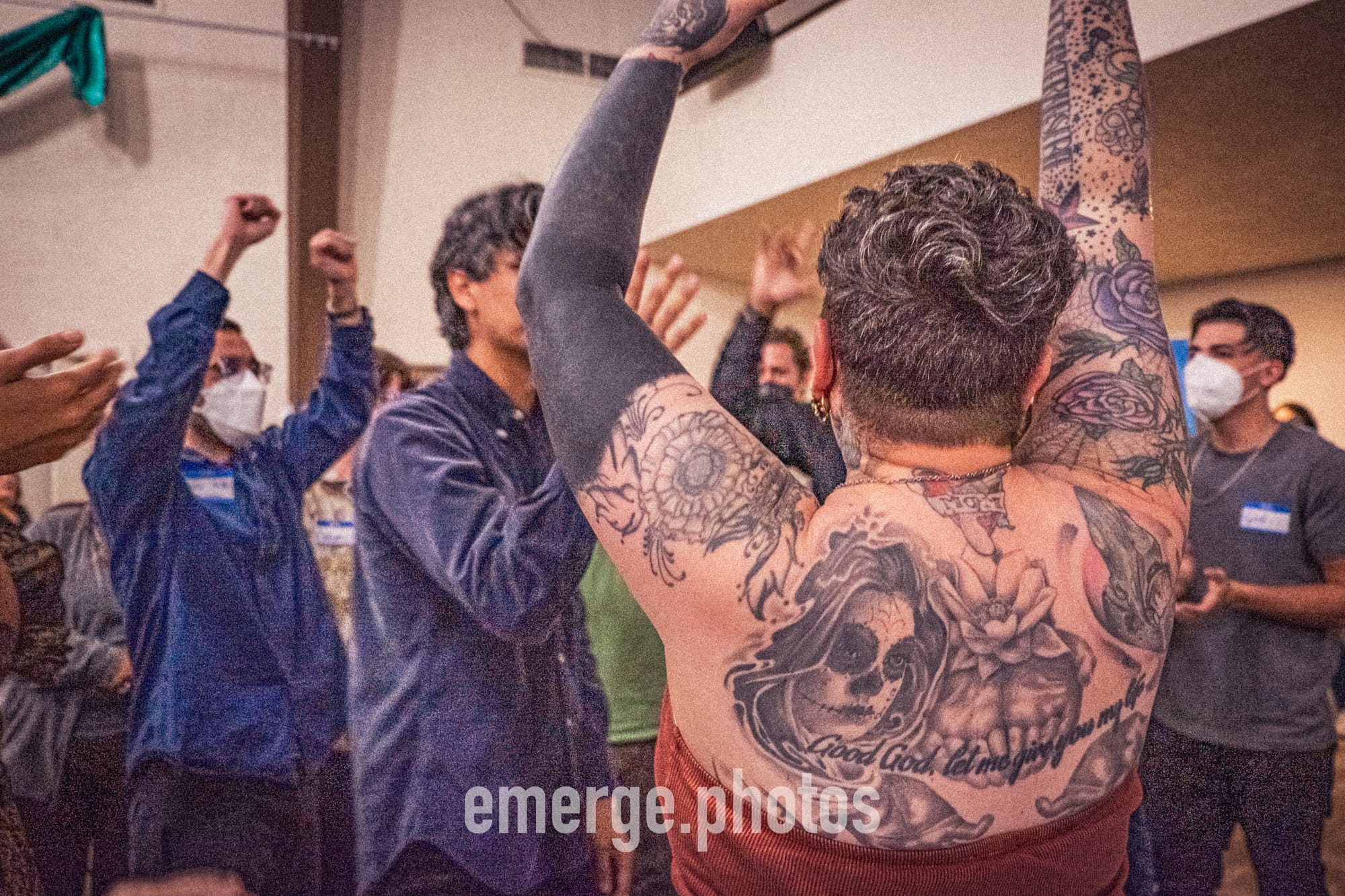
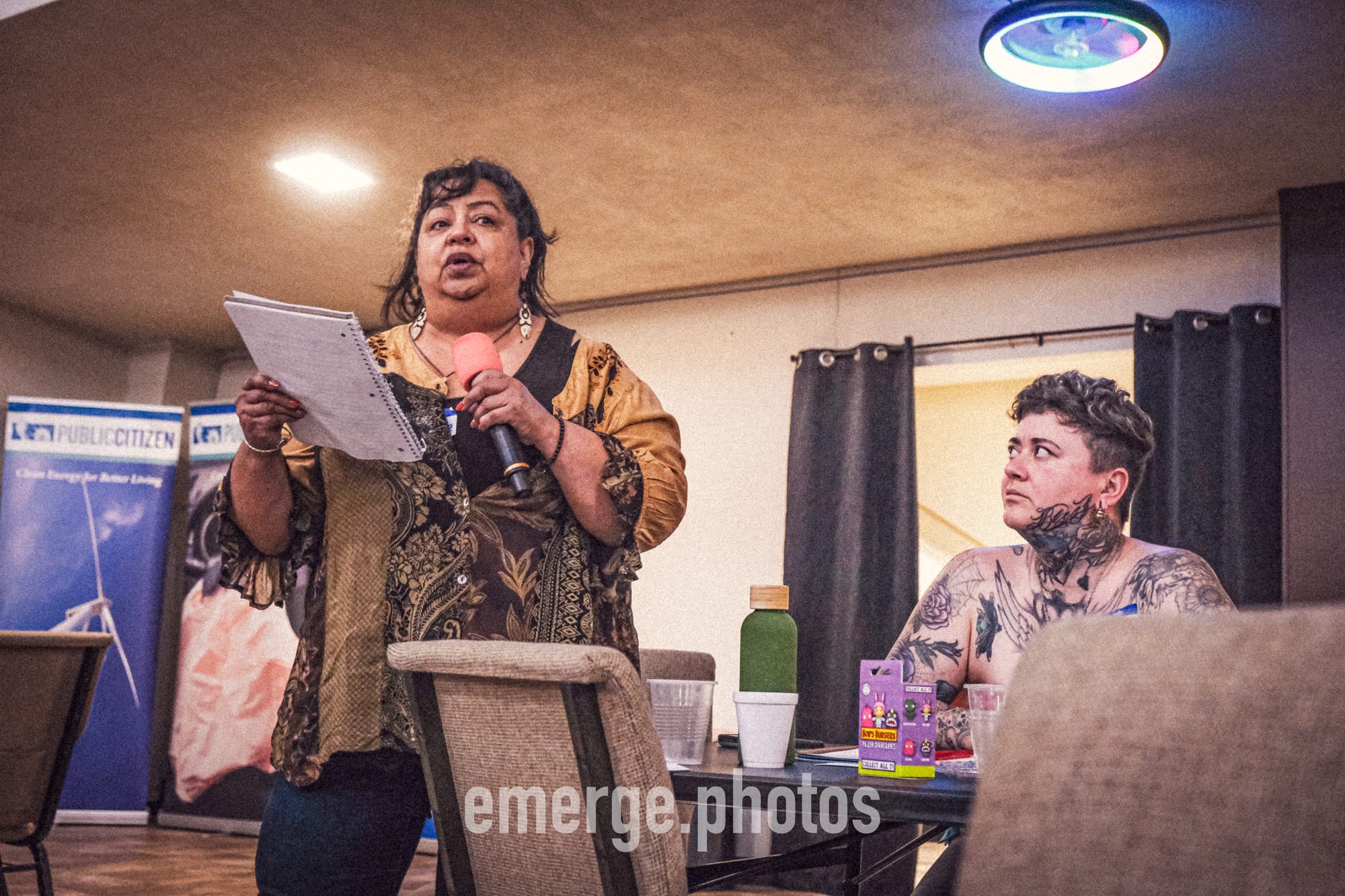
Last week, dozens of seasoned activists and rising community leaders from across the state gathered inside a Westside San Antonio church to learn from one another about the projects they are being forced to contend with. The “Data Center Rebellion” was organized by orgs like the TX Youth Power Alliance, Public Citizen, Climate Justice Alliance, and the Southwest Workers Union to construct a shared space for knowledge generation and strategy sharing.
“We brought people from all over the state that are trying to stop data centers from being built in their communities. They’re trying to protect their water, their power,” DeeDee Belmares, a community organizer with Public Citizen and the nascent Texas Data Center Rebellion, told Deceleration. “We’re all together talking about our stories and how we support each other throughout the state.”
There was basic training about terminology and recent development trends, panels on federal policies, and discussions and breakout meetings. As Deceleration has heard from some of the more newly minted activists, the challenges for those just stepping into public policy fights are very real.
Multi million-dollar data centers typically draw on public relations firms possessing have “word-smithing magic to make these things sound at first not completely insane,” said Kay, from the Data Center Action Coalition in San Marcos, recently. (The DCAC is a recently formed coalition of volunteers that recently beat back an AI data center in San Marcos for the second time.) But, as Kay continued on a recent Deceleration Podcast, with ears properly calibrated for PR jargon, one may hear between the lines a pitch that sounds more like:
“Hi! We know Texas is a drought, but can we keep building these buildings you don’t need that require massive amount of water and spew all this toxic pollution?”
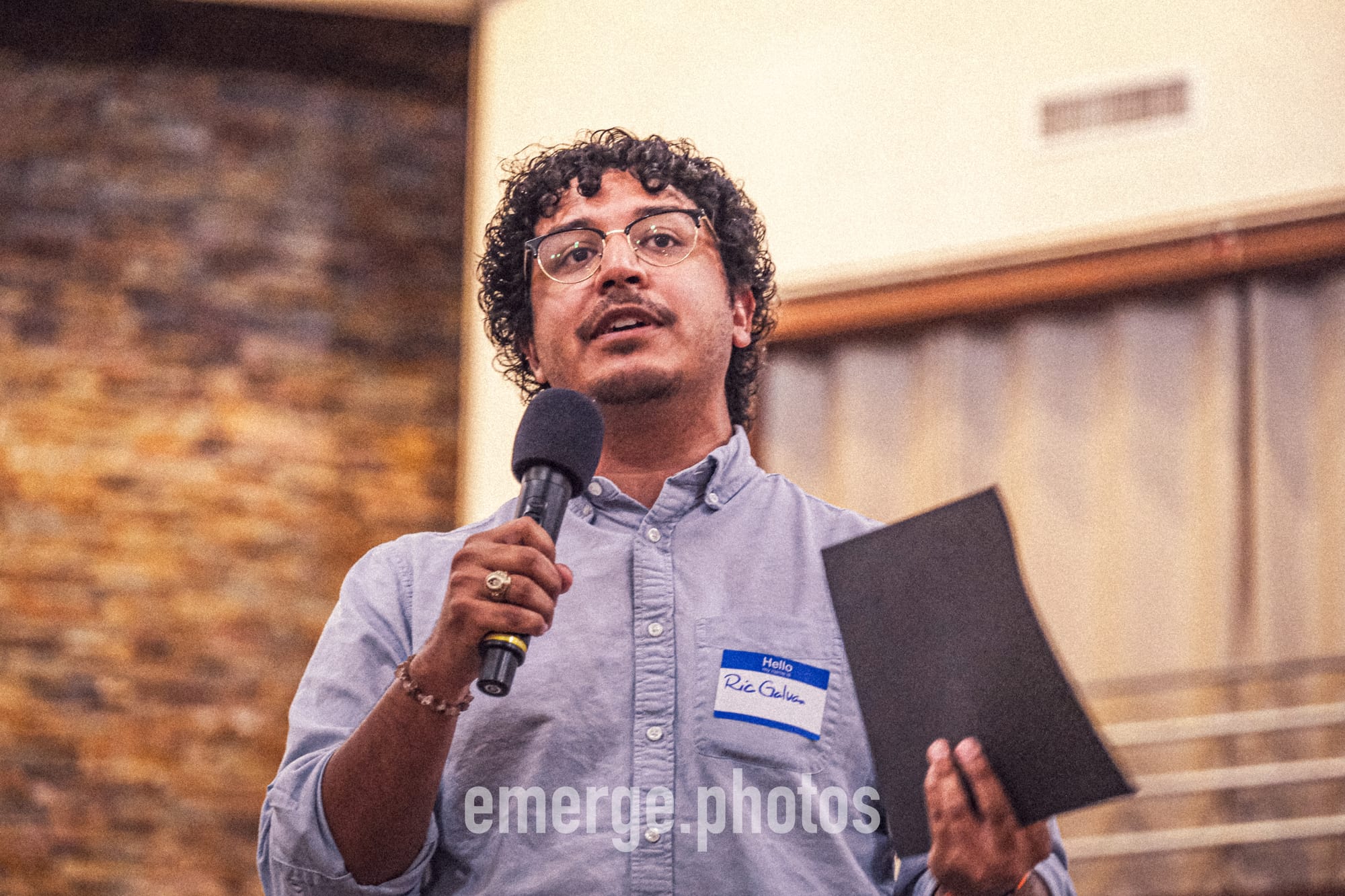
The weekend session opened with a welcome by local San Antonio Councilmember Rick Galvan (D6). The first-term Councilmember’s district has the highest concentration of data centers operating in San Antonio, the seventh-largest U.S. city.
He said that while data centers had always been a concern for residents, particularly things like construction, traffic, and loss of tree canopy, those concerns began to shift recently to include potential impacts on local utility rates. Electricity costs across a dozens states on the East Coast, for example, surged in December of 2024 from $30 to $270 per megawatt-day (MW-day), driving up costs for 67 million customers, researchers at Carnegie Mellon University found. The forecast that by 2030, data centers and crypto mining could increase U.S. electricity generation costs by 8 percent—and balloon U.S. climate-heating emissions in the power sector by 30 percent.
In response, Galvan recently advanced a proposal intended to help steer data center development in San Antonio (or a “comprehensive policy discussion”) in order to reduce some of their negative impacts. But on Saturday he made no promises about the ability of local government to outright block them. The proposed comprehensive plan has yet to be finalized or voted on. But it’s important to have some influence over how much water a project uses, or how much energy it consumes, he said, especially as the projects receive so much “subsidy” from public goods, like electric and gas infrastructure.
“We cannot continue to allow this industry to continue to grow without any kind of adjustment, without any kind of conversation,” Galvan said. “So we pushed out city staff … to look for a solution.”
The message to data center owners would be something like: “You’re needing our public infrastructure to subsidize your industry so you must be sure to answer the questions that we have and ensure that we’re taking care of our resources too, otherwise it’s a no vote for you.”
He praised those gathered for the two-day convening to push back on data centers with a call for solidarity:
“The only way we can do it in an effective manner is by organizing conversations like this, bringing folks in who are not normally engaged, as well, to push as say no matter what our political beliefs may be on every single issue we know this effects all of us in some form; we have to be able to have a unified push on this.







How Much Power and Water Will Data Centers Use?
Belmares welcomed those in attendance with recent projections highlighting the scale of the threat.
As Texas becomes that global data center hub, the demand for power will be immense.
Citing data from a recent Houston Advanced Research Center white paper, Belmares pointed to a potential surge from today’s estimated 25 billion gallons of water used by data centers every year for electricity and cooling to up to 161 billion gallons per year—“potentially representing up to 2.7% of the state’s total water use”—by 2030.
A similar examination last summer by the data services company Aterio found the power demand in Texas could increase by 15 gigawatts (GW) by 2030 from the then-current demand of 4.7GW. If only 70 percent of the planned projects are built, Aterio writes, demand would jump to 12.12GW. (A single unit at a gas-fired power plant tends toward around 300MW-400MW of generating capacity, for reference.)
CPS Energy, the city-owned gas and electric utility in San Antonio, is preparing to allow data centers to build their own power plants should the utility be unable to keep up with demand, she said.
“Our utility is creating a new program for hyper scale data centers. If they don’t have the power just yet to bring them online, you bring in gas plants, right?" Belmares said. “You bring whatever power you need in order to run that data center.”
That would put new sources of air pollution potentially very close to local homes. And many data centers, she added, also rely on dirty diesel-powered backup generators.
During a presentation on federal policy trends, Vanessa Thomas, EJ research manager at the Climate Justice Alliance, called the facilities “energy and water vampires.”
“Increased utility rates, increased water and environmental harm. We’re seeing secrecy and lack of transparency with NDA’s [non-disclosure agreements],” Thomas said. “It’s really hard to get information around just how much energy and water these data centers are actually using. Tribal consultation: These data centers are moving forward without free prior informed consent. And of course these data centers are relying on new fossil fuel energy, and they’re using things like backup diesel generators.”




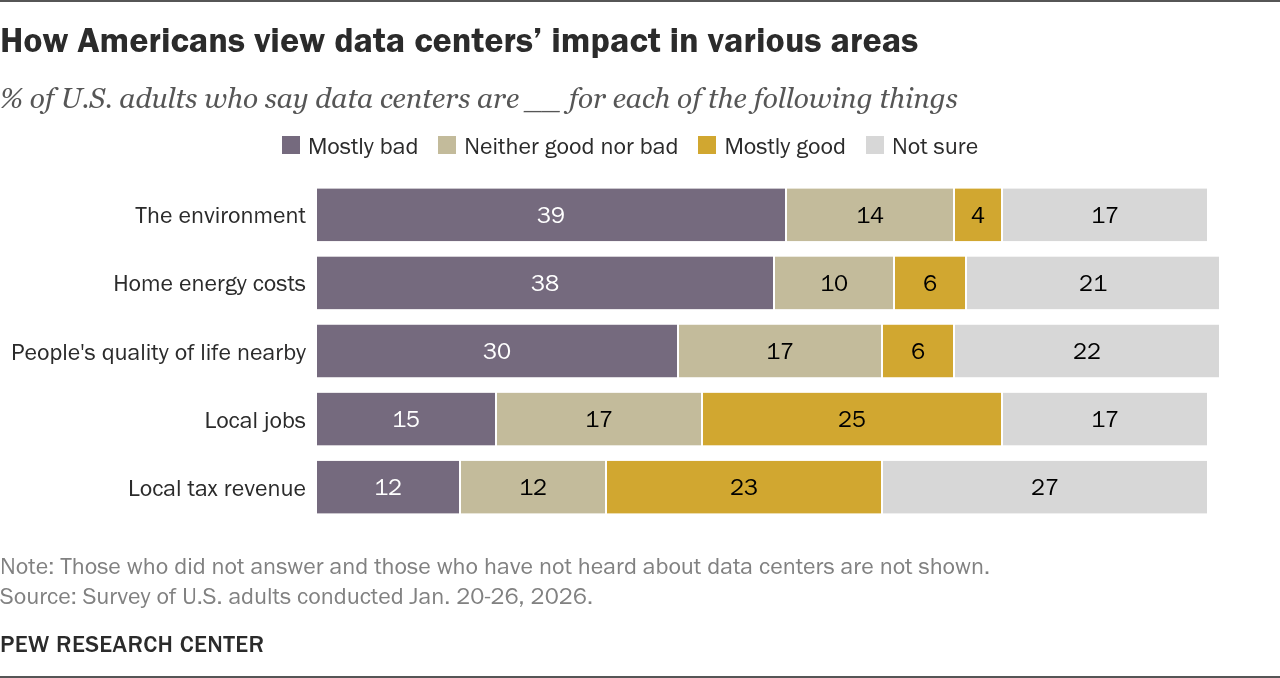
‘Mostly Bad.’ Popular Opinions Aid Community Organizers
San Martian resistors lean into the fact of data centers wide unpopularity in explaining their success to date in keeping the Highlander SM 1 in check in spite of repeat appearances before their city council. And it is true that far more people believe that data centers are bad (as opposed to “mostly good” or even “neither good nor bad”) for the environment, for home energy bills, and quality of life, generally. At least according to the Pew Research Center survey findings released last month.
In Texas, the Dallas-Fort Worth metroplex has seen the most data center buildout to date. For that reason, Sanjay Ravigopal urged attendees to focus their fight there.
"The D-FW area has the most data centers than any area of Texas. So if we have to make an impact anywhere in Texas, I'd say it's D-FW. I don't know how we're going to do it; I don't know how we're going to beat billions of dollars. That's why we're here today."



Under Siege: Local Communities Struggle Beneath Federal/State Sellout
Organizers pushing back on multi-million dollar or billion-dollar data centers face a daunting task. The Trump regime has committed us to "Winning" the AI "race," by executive order (ie. "Removing Barriers to American Leadership in Artificial Intelligence"). They're seeking to reduce or eliminate regulation across the board. And Texas under MAGA is just as determined to turn the state over to these same financial interests.
The Texas Responsible AI Governance Act (TRAIGA) signed into law by Governor Greg Abbott sought to put down guardrails on certain practices (like "manipulating" behavior or creating so-called deep fake videos)—but nothing about water or power or land use. Texas Republicans also align with Trump in the desire to prevent more local controls. TRAIGA, for example, "supersedes and preempts any ordinance, resolution, rule, or other regulation adopted by a political subdivision regarding the use of high-risk artificial intelligence systems."
Belmares said the progress made during the event will roll into work across the state going forward.
“Leaving here, we’re hoping to continue to organize with each other on a monthly basis via Zoom," she said. "We’re going to start talking about the next legislative session. We know that data centers are going to be a big issue in that session. So how can we impact our elected officials at the state level?”
-30-
In the coming week, Deceleration will be sharing our interviews with Rebellion attendees and detailing the fights in which they are now embroiled. Check back at Deceleration.news.
Top Image: Decision-making by 'Rock-Paper-Scissors' at the Texas Data Center Rebellion. Image: Greg Harman.
Video
OUR AI ARMS RACE...TO THE BOTTOM. This is my introduction to Deceleration's March podcast that includes guests from the Data Center Action Coalition (Kay and Saunders), words from Azul at Esperanza talking Todos Agua III, plus Roxana Rojas of ICE Watch talking with organizer Sarah Cruz. Join us Deceleration on YouTube.
Water & Power News
- AI-aligned super PACs are pouring millions into Texas congressional races
- Corpus Christi has just a few months’ worth of water left — and insatiable industry demand
- New Texas House priorities include water supply, data centers, absorbing New Mexico counties
- Texas Republicans at odds with Trump AI expansion goals into rural areas
- The Crypto Industry’s Plan To Sink Unfriendly Democrats Is Backfiring
- How does artificial intelligence, data centers use so much water in Texas?
- 'No ammunition': Customers say they feel silenced in water bill fight
- City of Shallowater notified of elevated levels of uranium in drinking water


