

Welcome to Water and Power, a monthly newsletter about the elements of our survival—and those who seek to profit from them. Water & Power highlights reporting found at Deceleration, but also offers links to critical stories from other publications, prepares you to engage on these issues with notices of events around the bend, and always offers unique content exclusively for newsletter subscribers.
If you know someone who would appreciate this research and analysis, pass it along. Subscribe to this and our growing roster of Deceleration newsletters. — Greg Harman
Extreme Drought to Extreme Storms: Texas's New Whiplash Weather Requires Greater Preparation
Once upon a time, Texas’s Hill Country was celebrated as “the Land of 1,100 Springs.” This ecological wealth is not always obvious, as most of the state’s ecological gems have long been hidden behind barbed wire, a state where virtually all land has been sold off as private property. Today we know a mere shadow of what’s been lost. San Antonio’s sacred Blue Hole flows only after the heaviest of rains, and only for a day or so. The rest of the water making up the San Antonio headwaters is pumped-in recycled water. Jacob’s Well outside Wimberley is becoming better suited to spelunking than floating. Big Spring was a big spring…but its flow today is pumped in like the San Antonio.
“The future of many Texas springs is clearly not assured, and that should be cause for concern for us all,” Larry McKinney wrote back in 2005 in Texas Parks & Wildlife Magazine.
A study published in 2024 sought to update a 1975 survey of Texas springs, finding that 11 percent of springs had gone dry by 1981. They found another 30 percent of Texas springs had gone dry since 1981—“an increase of 173 percent, or 2.7 times more,” the authors wrote.
(No wonder the residents of San Marcos have rallied against pressing in of water-ravenous AI data centers, no? It's not just them.)
Drought continues to grip much of Texas, deeply across the Hill County and South Texas. While we’re getting a bit more rain than is typical this month, it will take much more to break the drought.
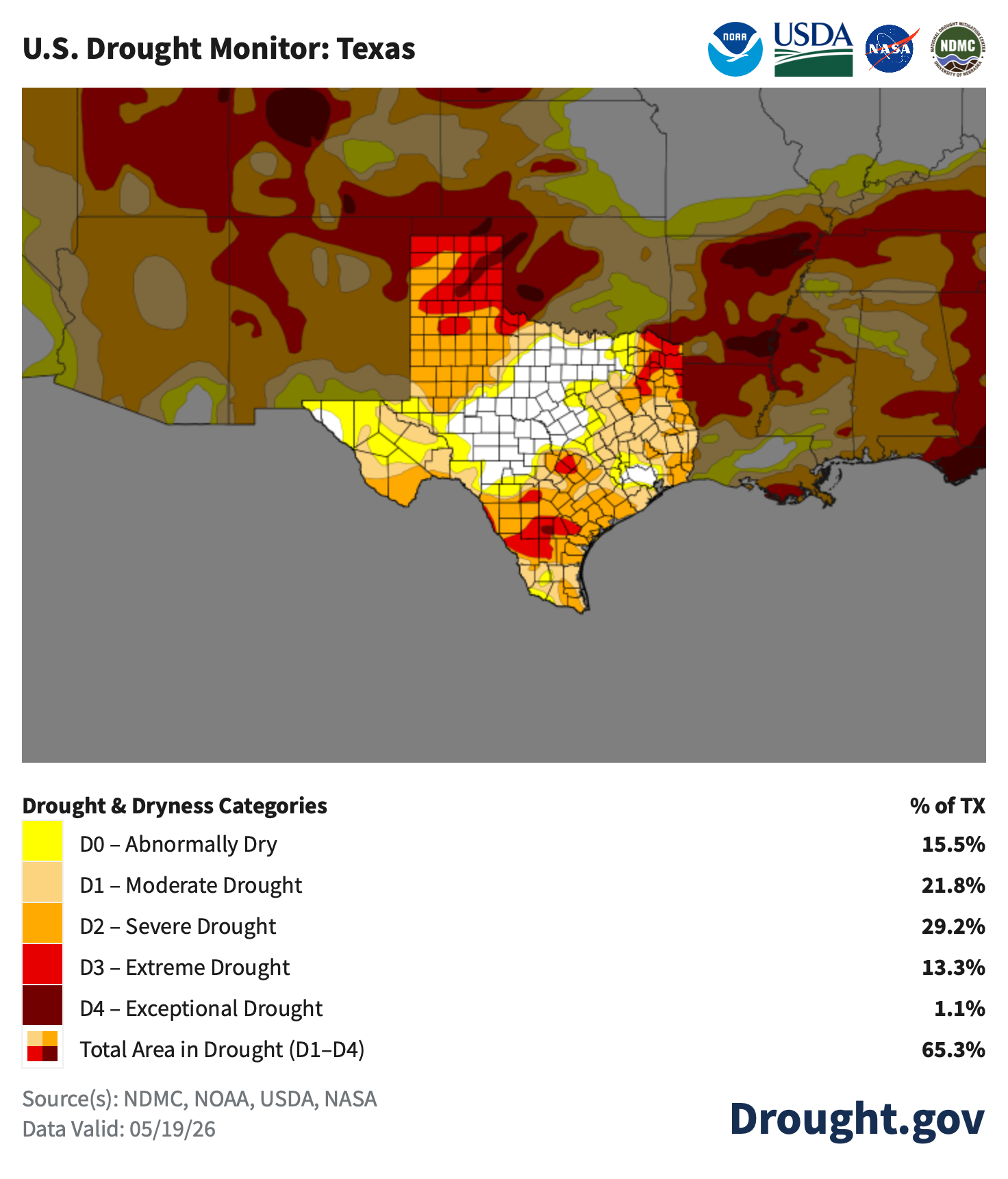
And it’s not just Texas.
More than 60 percent of the entire United States has entered some level of drought in recent months. Andrew Ellis, a climatologist at Virginia Tech University, said that a warming planet is compounding the hardship of declining rainfall patterns.
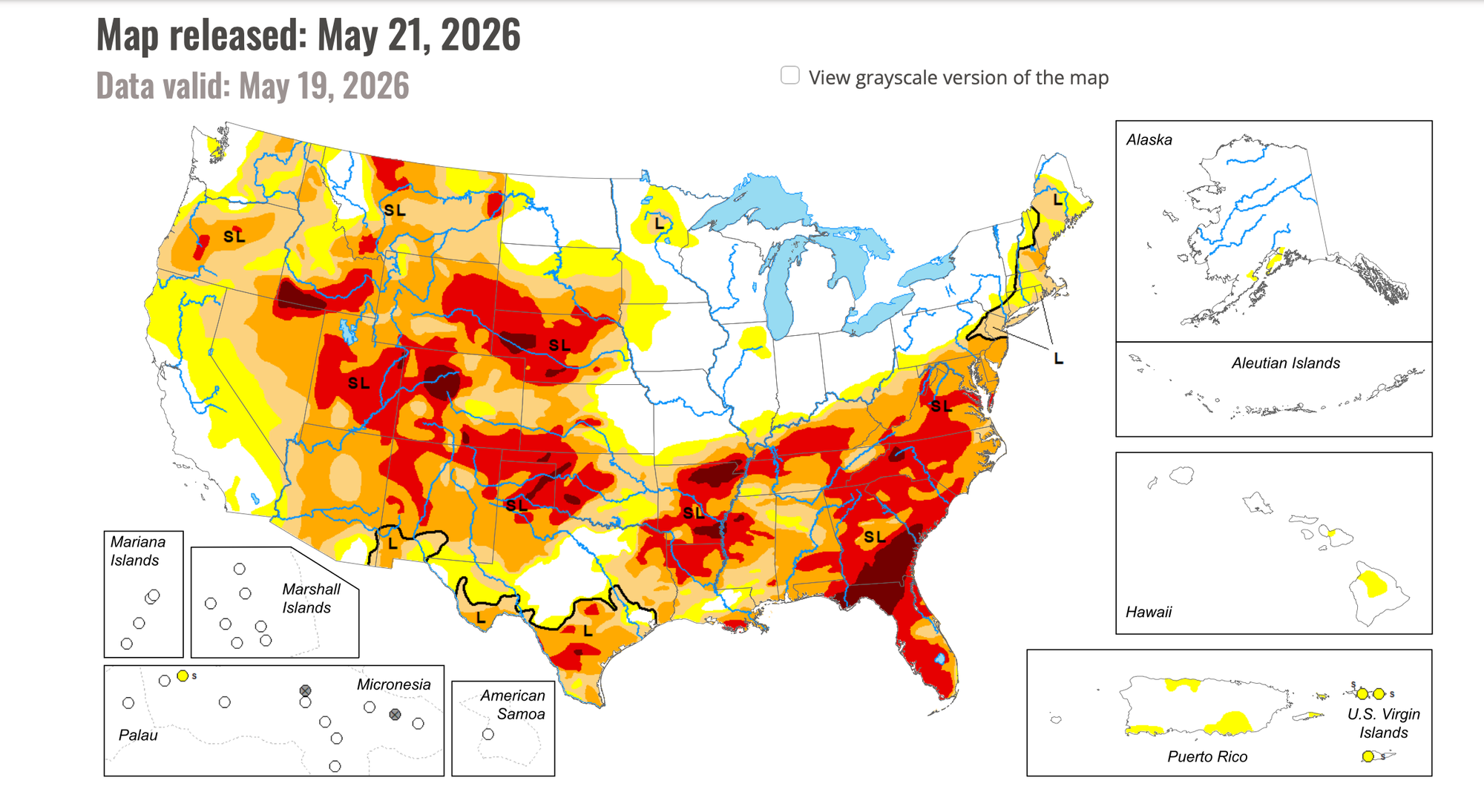
"While precipitation remains the primary driver of drought, increased air temperatures lead to greater water loss from the soil through evapotranspiration, intensifying the effects of dry spells," Ellis said.
So-called “flash droughts” are being driven more often by heat patterns (as opposed to rainfall) and bring severe risks to agricultural systems via rapid soil moisture depletion. That shift is making forecasts more difficult.
But prepare for a major overcorrection, as a massive rain system crosses Texas moving along a strong subtropical jetstream. Rains recently soaking to the north of Corpus Christi offered a ‘Day Zero’ reprieve—with forecasts now holding that full water-crisis reckoning may now be delayed until early 2027, Inside Climate News reports, updating readers on the products of an emerging “Super El Niño.”
“Typically, El Niño has brought cooler and wetter weather to the Gulf Coast in late fall and winter. This year, record warm water in the Pacific Ocean could produce the strongest El Niño pattern in a century,“ they write.
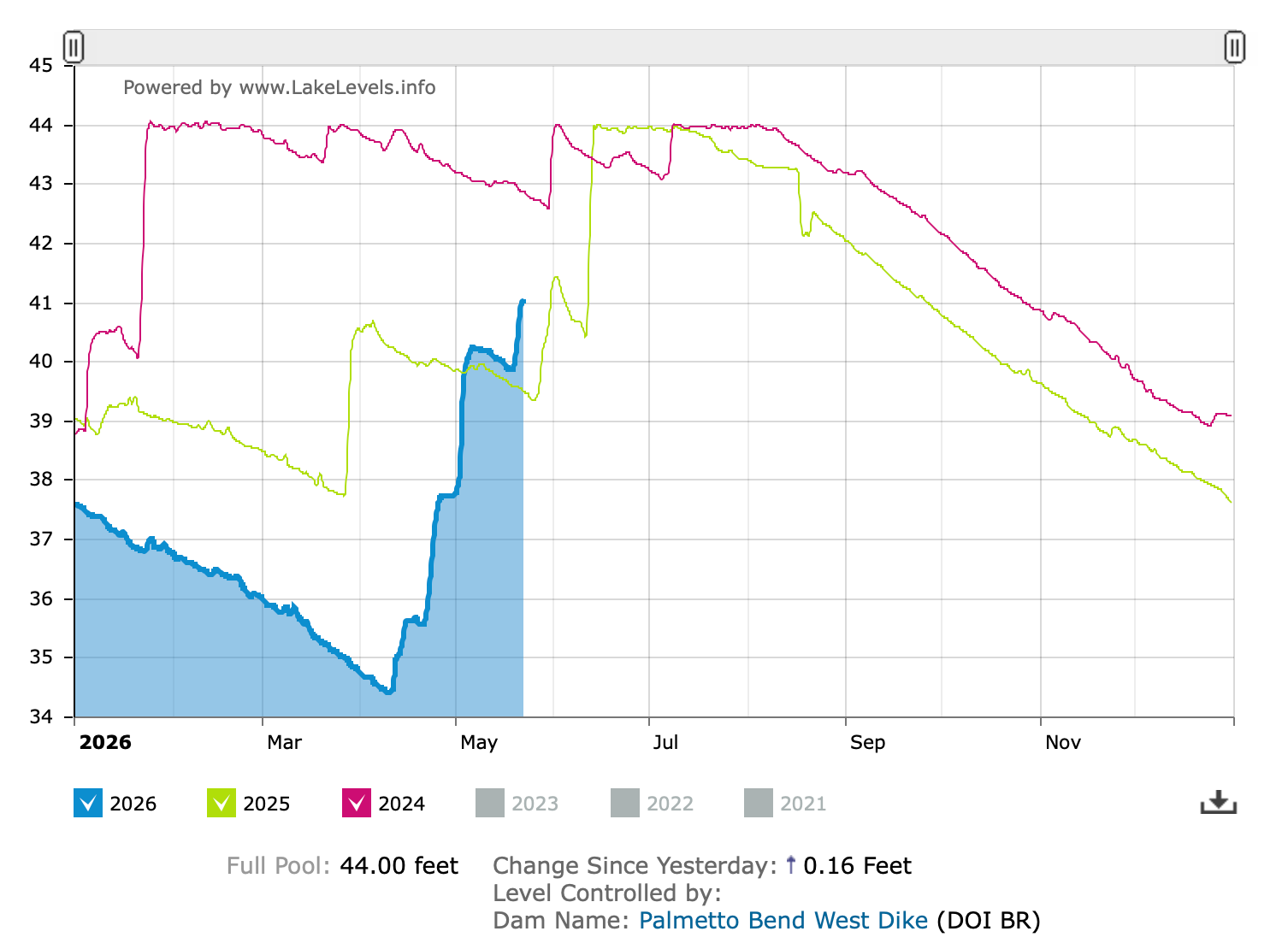
You can see recent rains boosting levels at Lake Texana by nearly 10 feet, a primary source that Corpus ties into.
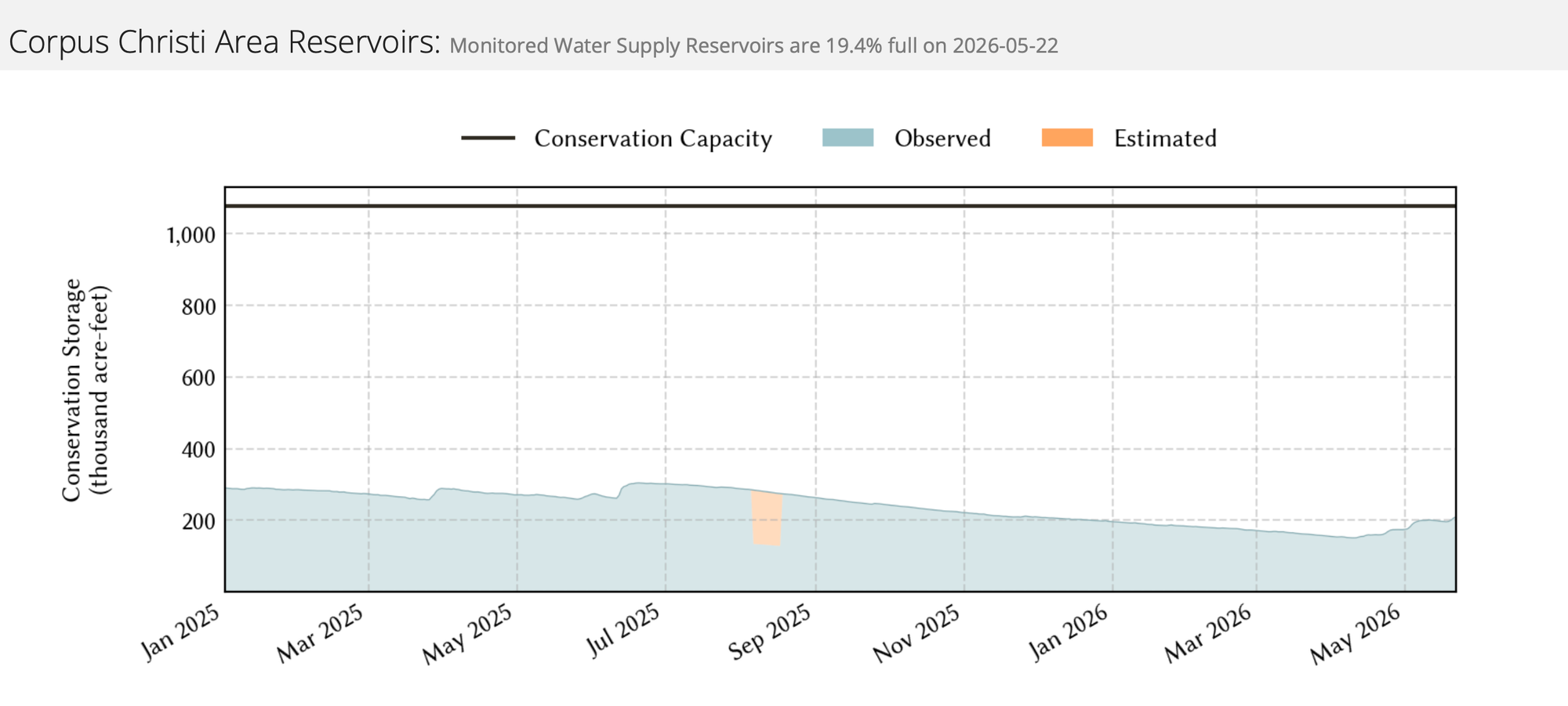
Corpus Christi's closer-to-home sources, however, haven’t improved. Choke Canyon Reservoir (less than 8 percent full, compared to 14 percent a year ago) and Lake Corpus Christi (12 percent full from 20 percent a year ago). All together, Corpus's reserves are down to 215,076 acre-feet capacity, compared to 268,000 in January 2025. But it’s still a salvaging bump from a low-spot of a month ago when the three reservoirs were holding a mere 166,000 acre feet.
Meanwhile, Lake Amistad—providing for the residents of Del Rio and Laredo—is dragging at 30 percent capacity. Water users up the hill in Uvalde are in Stage 5 water restrictions with water rates now double their normal cost. And in spite of a recent bump in the fast-recharging Edwards Aquifer underlying San Antonio, Bexar County remains in severe drought with Stage 3 drought restrictions remaining in place.
The week ahead looks wet, however. Dangerously wet if you are in East Texas and greater Houston area, where all this wet air crossing over may manifest as more than a foot of water dropping over the next week, writes Jeff Berardelli, a Tampa-based meteorologist and climate specialist at WFLA NBC.
It's “Drought to Deluge,” he writes:
 Jeff Berardelli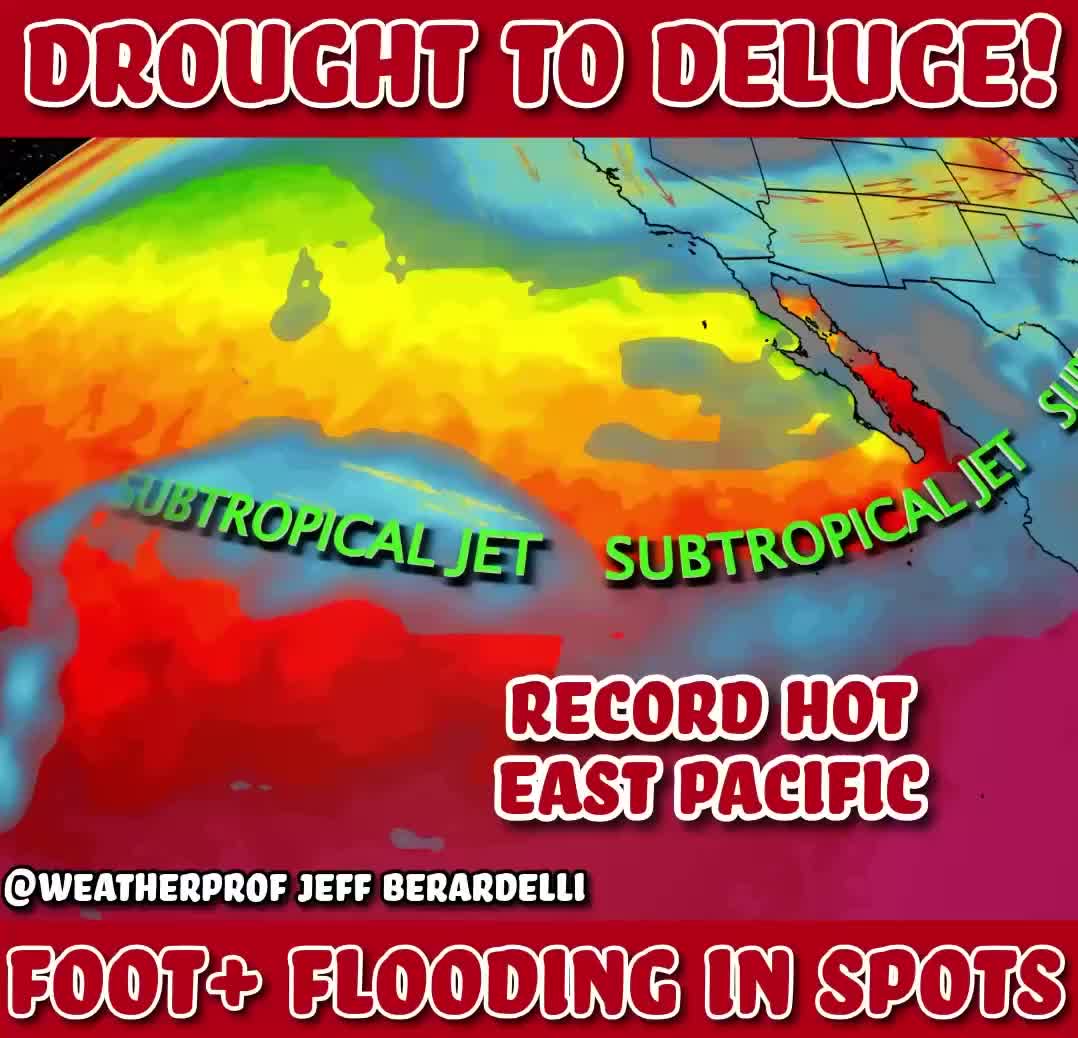
These are days of climate extremes.
Sudden—and suddenly horrific—storms puncturing periods of punishing drought are our new weather reality. It's the weather I was writing about 20 years ago as a climate forecast.
Here's an excerpt from a story I wrote in 2007 titled, "Global Warming Hates South Texas":
While it’s unlikely, rainfall levels may stay roughly the same as they have been, but they will probably be delivered in bursts of violence, followed by intense flooding, separated by periods of drought. What water does reach the region will be lost to evaporation thanks to an anticipated 7-degree spike in average temperatures [by 2100], researchers found.
Many of these changes have come on faster than predicted.
This new reality captured by our rivers, rivers that give people access to so much of our precious lands held behind barbed wire and fences thanks to their legal distinction as state waters, entrusted to the public, can turn terrible fast.
Several major rivers flow from the Hill Country, Katherine Romans, executive director of the Hill Country Alliance, reminded attendees of the River Network’s recent River Rally, which drew hundreds of guests to San Antonio from across the U.S. and tribal nations. She then shared a trailer from the new film, “Hope for the Guadalupe,” which spotlights the rain bomb the hit the Hill Country last July, killing more than 130 people. (Ongoing relief donation link here.)
Ten inches of rain fell in less than six hours at its peak, hitting rocky hilltops and canyons where years of drought had made the already rocky landscape less like soil and more like concrete. Even in more favorable conditions, there was simply not time for that rain to soak into the ground; it rushed down, into the river’s channel, and started claiming lives.
“Had those rainfalls happened just a few miles south we would have been talking about a completely different scenario,” offered Erin Cavazos, engineering manager at the San Antonio River Authority, speaking on the same stage moments later.
Predictions originally held the rain would drop further to the south, Cavazos said, offering a false sense of security when folks turned in for the night.
“I think that led to people going to bed that night not thinking what could happen, [with] a comfort level that maybe shouldn’t be there,” Romans said.
There was also massive, less discussed, ecological destruction from that massive flood, as “Hope for the Guadalupe” highlights, and a growing movement to heal those harms.
Across much of the Guadalupe, more than 50 percent of vegetation was ripped away. In some places, that percentage rose to 100 percent, in part due to what Romans called “well-meaning contractors” on cleanup crews, as the screen flashed a grader-flattened barren landscape beside the iconic river. “Very thorough," she added, "and also paid by the tonnage.”
“The only thing stopping and holding stormwater now is a little loose gravel and the tire marks,” she said.
Hope for the Guadalupe Trailer
"Hope for the Guadalupe" from Fin & Fur Films (who you may remember from 'Deep in the Heart') has been making the rounds across the region; the next showing is planned for Wimberly, Texas, on May 31.
Hundreds walked up the hill and into the San Antonio Botanical Gardens last week on a breezy evening to take in the film and learn about ecological restoration efforts being led by Hill Country Alliance, San Antonio Botanical Garden, the Kerr County River Foundation, and the Hunt Preservation Society.
But the challenge for weather forecasting and amplified storms remains. Now with the massive storm headed for East Texas, better forecasting could still make a big difference.
Cavazos described the problem giving voice to a theoretical but familar-sounding forecaster warning residents of “1-2 inches, with some areas with 8 inches.”
“OK, Cavazos said. “Which areas?”
The wrong location, higher intensity, and “somebody’s going to die,” she said.
This was my second recent conference where the Hill Country floods were discussed with critical discussions worth sharing.
Last month, John Nielsen-Gammon, Texas’s state climatologist, joined a panel on the topic at The South Central Climate Resilience Forum (SCCRF), a collaboration of folks across the states of Arkansas, Kansas, Louisiana, Oklahoma, and Texas. (Full video is below.)
He described how the monstrous rainstorm flowing from Tropical Storm Barry paused over the South Fork of the Guadalupe River growing larger and holding immense amounts of water. It then unleashed its load as it moved with the floodway.
“It was the worst possible scenario: you have extreme rainfall falling on top of a flood, which is growing as it moves downstream,” Nielsen-Gammon said.
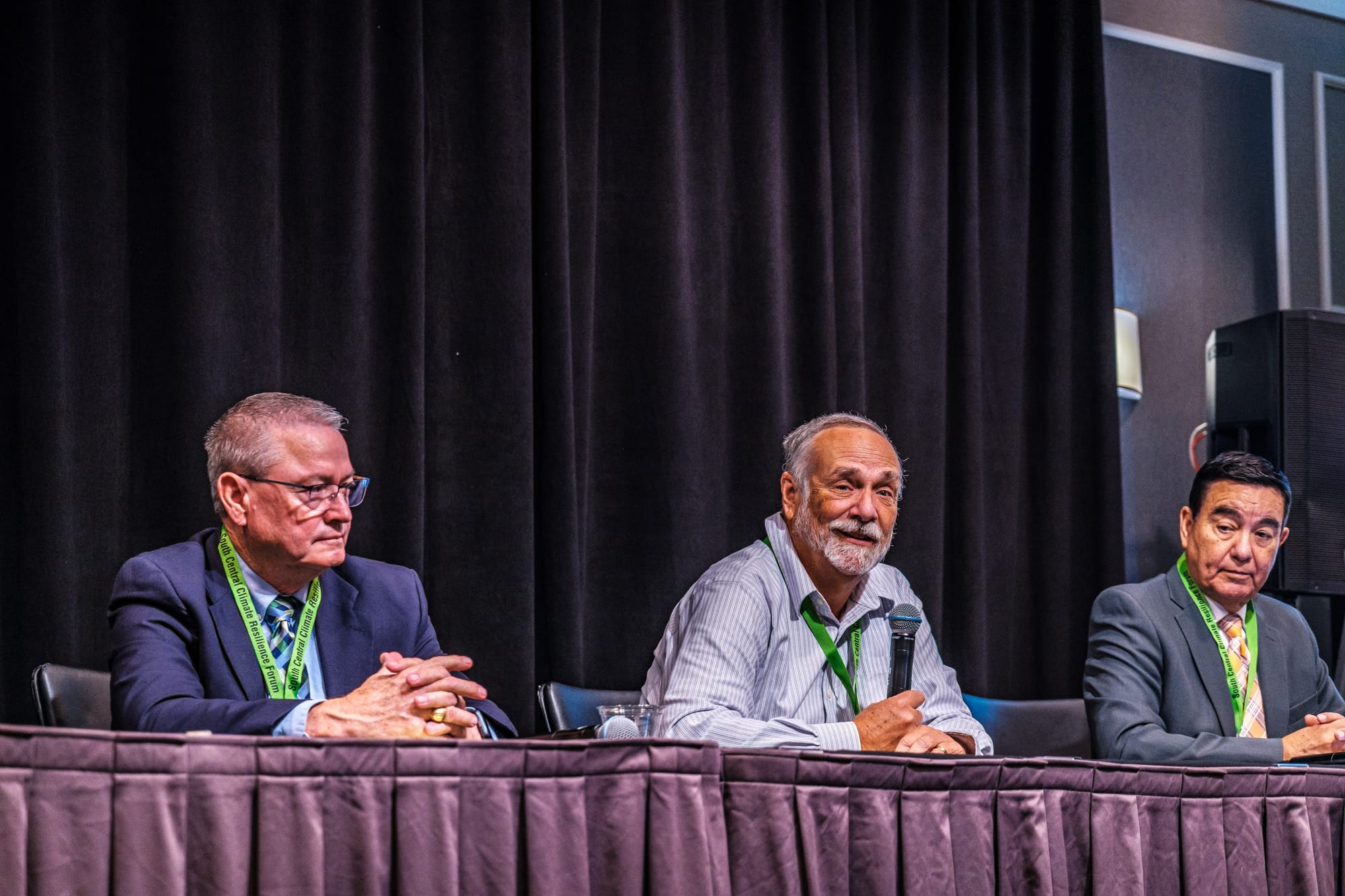
Full Panel Video: The 2025 Hill Country Floods: Science, Community, and the Path Forward
He also described it as emblematic of our new climate-caused weather realities, with growing extreme rainfall events continuing to become ever more common—thanks to the massive amount of heat-trapping gases that fossil fuels are injecting into the atmosphere.
“Unfortunately the Hill Country flooding is the sort of event we’re going to have to continue to deal with in the future,” Nielsen-Gammon said.
SARA’s Cavazos made an appearance here as well.
She described efforts to restore natural waterways, such as the San Antonio River being opened up for greater capacity and filled with native plants, as critical flood-control responses.
“The more we can build things that hold [water] in and give it time to soak in, the less impactful these events are,” Cavazos said.
Such re-engineering (ie. “nature-based solutions”) have a range of benefits, including dampening flood impacts. Though it would have done nothing for the Guadalupe last July.
“That amount of water is more water than we can design for,” she said.
Deceleration wanted to know what all the planners and researchers and emergency responders thought about empowering the recipients of all these expanding disasters with knowledge about the role we are all playing by allowing the climate crisis to accelerate at such a pace.
What about our opportunities to reduce the ferocity of storms before they ever form? What about cooling down the planet by ending fossil fuels and protecting and restoring wild spaces both on land and at sea? After all, we have made this new dysfunctional climate. We could also unmake it, if we chose to.
“What we do about the climate is sort of a separate question or conversation than dealing with the climate,” said Nielsen-Gammon. “The problem of what we do about the climate is sort of politicized question. So I tend to focus on the what we do about it part.”
Cavazos agreed. SARA’s work is to plan and build for whatever science says in on the way—“not what the cause is,” she said. Even when the cause is us. And, therefore, preventable.
While other conference attendees later thanked me for my question, the remaining two other panelists also demurred.
Conferences like this one, at a time when climate science (and science generally) is under direct federal attack, are full of professional tremors, as I wrote last month. It's understandable the panelists weren’t fully comfortable with that idea of educating the community about the causes behind these strengthening storms and drought. And yet these are precisely the experts we need making all the connections clear so we can create effective policy to save more lives.
There's been little change among those tasked with reporting and interpreting the weather for residents, either. Our outraged dissection of the work of the Weather Wonks from two years ago stands, sadly, just as relevant today as when it was first published.
So let me offer this on behalf of all those who can't or won't speak this simple truth:
You have the power to change this.
Video
Here's a throwback that fits the mood, created after the destruction of the Clean Air Act's oversight powers for planet-working gases. ... "More than 100 years after the discovery of the greenhouse effect and the relationship of gases like carbon dioxide to that warming, they were finally added to the umbrella of the Clean Air Act in 1990 and roughly 16 years ago integrated into our regulatory system. So Long CCA, we hardly knew you."
Event
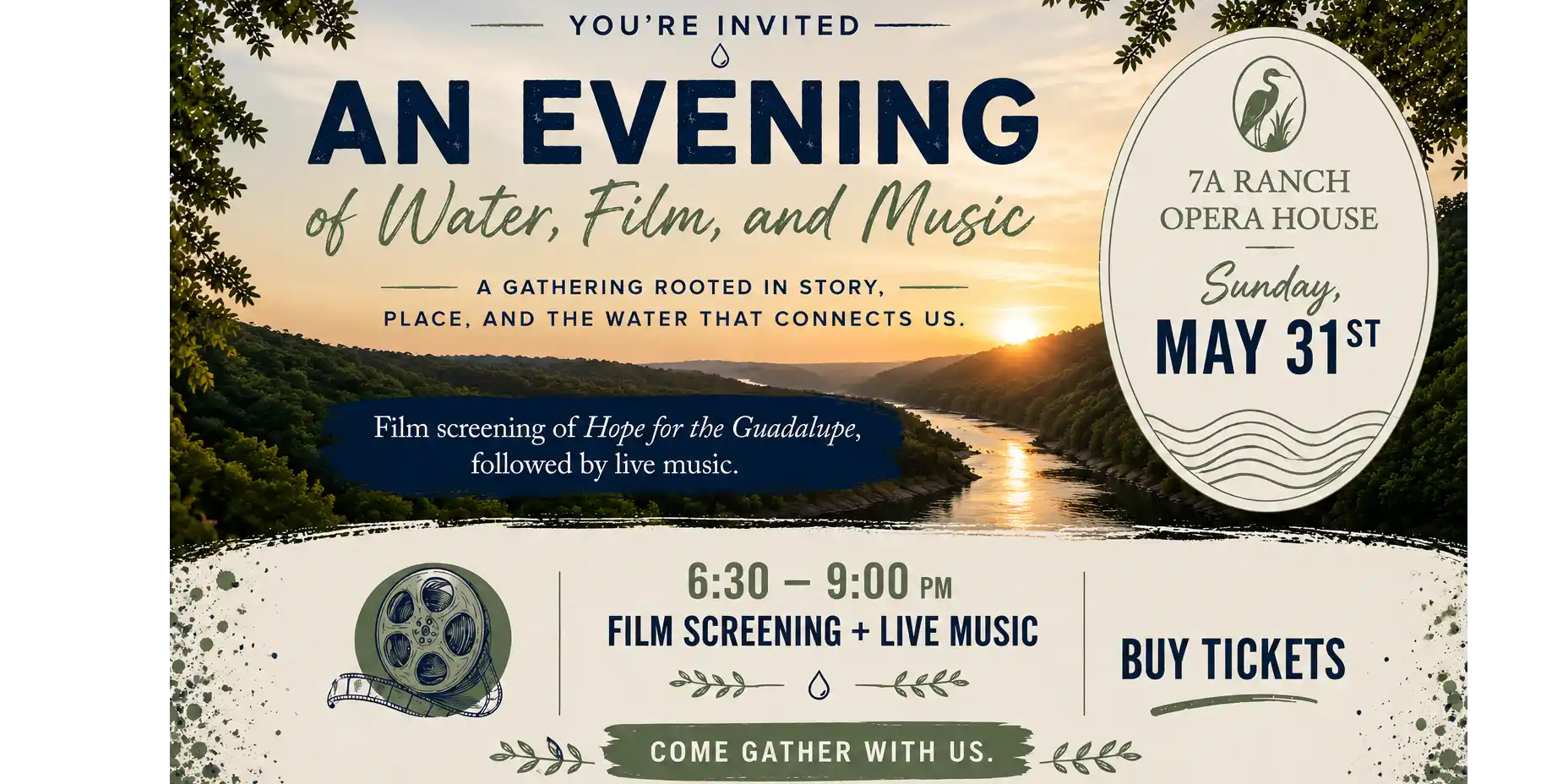
Join us at the 7A Ranch Opera House in Wimberley for an evening of film, music, and connection rooted in the water that sustains our region.
Tip Jar

Buy Greg a Coffee (or Three)
Show your appreciation for all the information and energy Water & Power brings every month.
Water & Power News
- Driver intentionally drove Cybertruck into North Texas lake to use vehicle's "Wade Mode", police say (CBS News)
- It didn't go well.
- San Antonio household water bills could jump $222 annually if council approves rate hike (San Antonio Current)
- North Texas nonprofit's working drilling water wells in Africa stalled by war with Iran (Fox4)
- Hardeman County residents worry over AI center’s water use (KFDX)
- Rio Grande faces early drought conditions (KOB, New Mexico)
- 'Big inconvenience': North Harris County residents on 12th day without drinkable water (ABC13)
- State officials adopt North Texas' plan for securing enough water for booming population (Dallas Morning News)
- A Bit of Good News for Right Whales (Inside Climate News)
- Federal Law Requires US Seafood Imports to Not Threaten Marine Mammals. A Lawsuit Is Pushing the Government to Finally Act. (Inside Climate News)
-30-
Top image: Sam Marie Hermitte of the Texas Water Development Board speaking at the recent South Central Climate Resilience Forum. Image: Greg Harman


